
Charities appeal NICE decision on CAR T-cell therapy for mantle cell lymphoma
Blood Cancer UK, Anthony Nolan and Lymphoma Action have formally appealed against a decision to remove a key CAR T-cell therapy removed as a treatment option for some people with mantle cell lymphoma on the NHS in England and Wales.
NICE (the National Institute for Health and Care Excellence) has recommended that brexucabtagene autoleucel (also known as Tecartus) should no longer be routinely available for people mantle cell lymphoma whose cancer has come back or hasn’t responded to previous treatment.
For some people with mantle cell lymphoma, whose cancer has come back or hasn’t responded to previous treatment, this CAR T-cell therapy offers a last hope of a cure.
- Dr Rubina Ahmed, Director of Research, Policy and Services at Blood Cancer UK
Our response
Our Director of Research, Policy and Services, Dr Rubina Ahmed said:
“For some people with mantle cell lymphoma, whose cancer has come back or hasn’t responded to previous treatment, this CAR T-cell therapy offers a last hope of a cure. We recognise that NICE decisions involve complex clinical and economic considerations, but we are concerned about what this could mean for patients who have very limited alternatives.
That’s why we have formally submitted an appeal, raising questions about how this treatment has been assessed and the implications of this decision for patients. It’s vital that advances in blood cancer treatment are reflected in the options available to people in practice.”
Why this treatment matters
Mantle cell lymphoma is a rare type of blood cancer that affects white blood cells called B lymphocytes. Around 600 people are diagnosed with it in the UK each year.
Brexucabtagene autoleucel is a type of CAR T-cell therapy, which uses a patient’s own immune cells to help fight their cancer. It is currently the only CAR T-cell therapy available for mantle cell lymphoma and is used when other treatments have stopped working.
For people at this stage of the disease, treatment options can be very limited.
Emily John, a CAR T-cell therapy specialist nurse at Anthony Nolan, said she had seen first-hand how the treatment has helped patients whose other options had run out, describing it as “a lifeline when other treatment options haven’t worked.”
The real-life impact
Paul Madley, 66, from Cardiff, was diagnosed with stage 4 mantle cell lymphoma in 2021. After chemotherapy, a stem cell transplant and a relapse, he received CAR T-cell therapy in 2024.
By March 2025, he was told he was in remission.
He has since returned to work part-time, walks his dog most mornings and plays golf. Speaking about the decision, he said the idea of the treatment being removed was “truly unbelievable” and that without it, “goodness knows where I would be.”
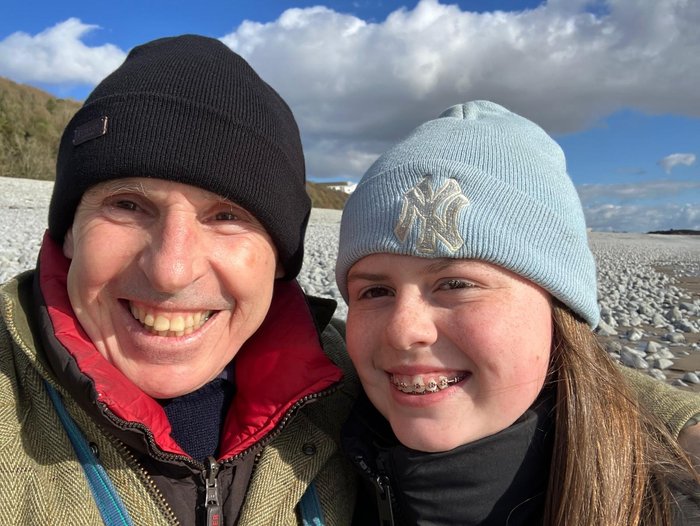
Paul and his granddaughter Summer
What happens next
The three charities have jointly submitted a formal appeal against NICE’s draft guidance.
NICE has said its recommendation should not affect people who had already started Tecartus before the draft guidance was published. Anyone who is concerned about their treatment should speak to their medical team.