Daughter who survived leukaemia three times recorded her own eulogy and wrote sister's wedding speech before dying from toxic treatment after effects
Yorkshire
Rebecca Alton was just five years old when she was diagnosed with blood cancer. After surviving leukaemia three times, she went on to become a scientist working on cancer medicines. But due to the toxic nature of her treatments, Rebecca developed incurable lung damage that would ultimately claim her life. Now, on the first anniversary of her death, her parents are sharing her story and are publishing a book about her life that she was determined to finish.
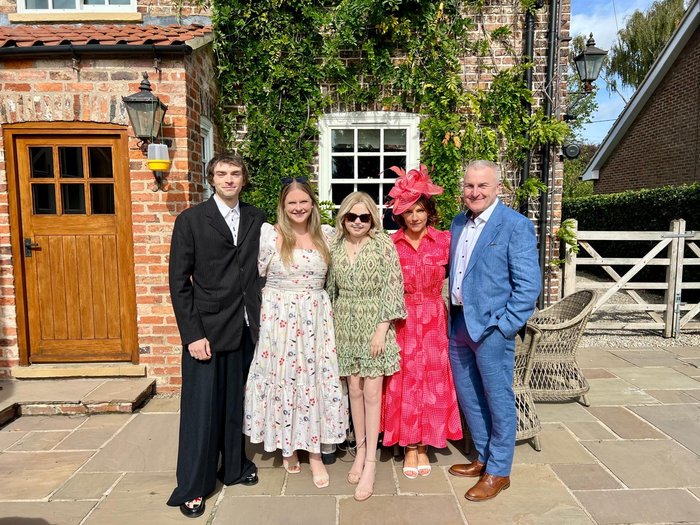
Rebecca Alton and her family
Her parents, Simon and Michelle, now both 55, from Alne near York, remember sitting around Rebecca's bedside with their other children, Charlotte and Matthew, reading parts of her book together, before she passed.
"We were laughing together, crying together, remembering things. It was just lovely to have that time with her, it was very special. Then she said, 'I'd like you to hear my eulogy. I'd like us all to be together when you hear it.' It was amazing, beautiful, it was sad, it was funny – it just summed her up.”
"I'm so grateful that we all got to hear it with her. That was such an amazing thing for her to do, and to want to share it with us all, not leave it with us, but to share it together.”
Rebecca also knew she might not live to see her sister Charlotte marry. Having been asked to be maid of honour, she wrote her speech and read it privately to her sister before she died. At their wedding in 2026, another bridesmaid delivered Rebecca's words on her behalf.
A childhood changed by blood cancer
Rebecca was diagnosed with acute myeloid leukaemia (AML), an aggressive form of blood cancer, in 2004, when she was just five years old. Until then, she had been a healthy, happy child, the youngest of three siblings.
Her mum remembers taking her to the doctor expecting nothing more serious than a prescription for iron supplements.
“I thought that I'd leave with iron supplements for her. When they said she'd got a serious blood condition, which they thought might be leukaemia, our world just fell apart that night. I was very much in denial. I just thought, no, she's too well. She wasn't that poorly, she wasn't that ill to have something this serious."
Rebecca began treatment, and for her parents, life became a constant balancing act between hospital appointments, caring for their daughter and maintaining some normality for her older siblings.
Although Rebecca initially responded to treatment, her leukaemia returned. She would go on to experience three episodes of the disease, undergoing extensive treatment, including two stem cell transplants.
Each relapse brought fresh uncertainty and increasingly difficult treatment decisions.
Simon said:
“Once you've seen it come back once, you're just constantly worrying. You'd be watching for the slightest thing.
When her leukaemia returned for a second time, Becca’s response was characteristically matter-of-fact
"Well, I've beaten it before. I'll do it again."
And when a consultant delivered the devastating news that her cancer had returned for a third time, Rebecca found a way to make her family smile. They said:
"She dealt with the whole thing with her dry, sarcastic sense of humour. You could be in a really awful situation with the doctor telling you something, and she'd come out with a one-liner just to make everyone laugh. Becca was definitely keeping us all afloat. I don't know how she did it."
Rebecca went on to achieve a first-class honours degree in biomedical science at York St John University, before building a career at AstraZeneca working on cancer medicines.
Having spent so much of her childhood as a patient, she was determined to use her experiences to help others.
"When she was younger, she always thought she'd be a nurse. Then she realised she was more interested in the research side of things, and that's how she ended up working at AstraZeneca making cancer drugs. Her knowledge of the science was absolutely incredible; she knew exactly what the doctors were talking about and would be asking them questions. Any drugs she had to take, she'd research them."
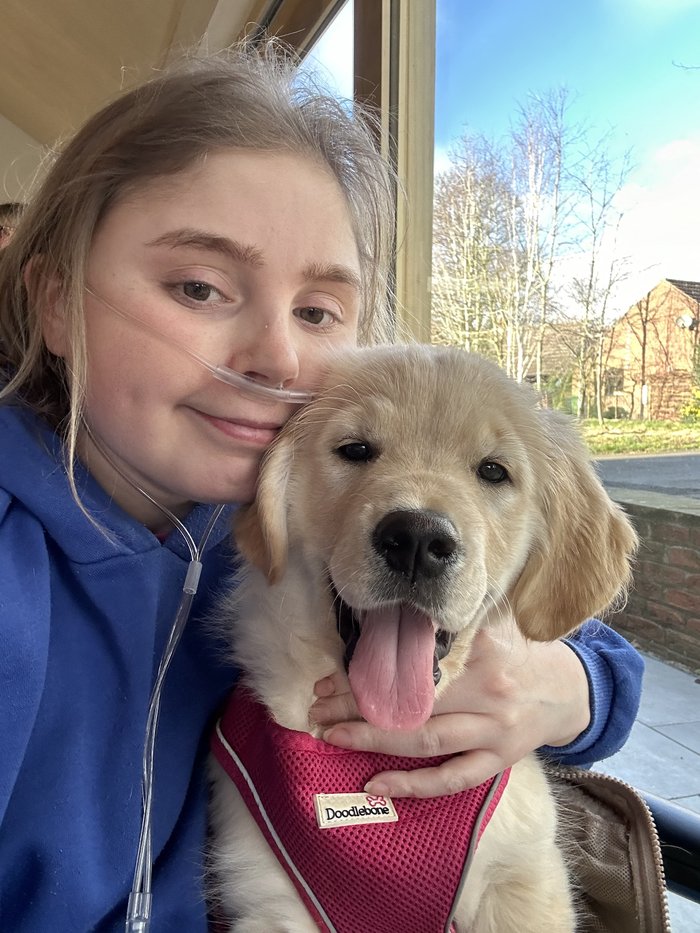
Becca at 24
Toxic effects of her treatment
Although Rebecca had survived her leukaemia, the impact of her treatment would continue to affect her health. Years after her second stem cell transplant, she developed serious lung problems which her family were told were linked to her previous treatment. The damage was incurable, and her health gradually deteriorated. Her mum explained:
"When she was younger I didn't pay any attention to the side effects. I was just thinking, get her through today and I had no idea that side effects could end up in her passing.
Simon added
"To suddenly find out that the treatment that had saved her had basically given her these lung problems, and that it was incurable, was just unbelievable. You think once she's got through cancer, if she's survived that treatment, then she's got through the main thing. We were quite naive in thinking that anything that severe could happen in the future."
Rebecca's experience highlights why progress in blood cancer treatment must be about more than helping people survive their diagnosis. Although treatment has improved enormously over recent decades, some people with blood cancer still face aggressive therapies, repeated relapses and serious long-term effects.
For people with AML, particularly those whose disease returns or does not respond to treatment, more effective treatment options are urgently needed. Simon hopes research will continue to improve not just survival, but the quality of life people can expect after treatment.
"It would be great in a few years' time to see people with AML doing a heck of a lot better with treatments. Can something be done about those side effects that affected Becca? Is there a treatment which will protect the lungs and hearts and other organs? That might be the dream."
As Rebecca's lung condition worsened, she needed medical oxygen and eventually moved back into her family home. She understood that her time was limited, sometimes describing herself as an "egg timer".
But rather than allowing her illness to dictate how she spent her remaining time, she focused on something she had talked about for years: writing a book.
"She used to say to the doctors and nurses, 'One day I'm going to write a book about it,' When she realised her life expectancy was being reduced, she came home one day and said, 'Right, I have to do this book.'"
Writing her memoir became Rebecca's most important goal. The book, Now, Crack On, tells the story of her life with blood cancer, the challenges she faced and her determination to experience as much of life as possible.
Its title reflects the phrase she used so often, including in the eulogy she recorded for her own funeral. Towards the end of the recording, Rebecca told her family: "Anyway, that's me done, so crack on, guys."
"Writing the book and getting it finished was her absolute number one goal," Michelle said. "She was so determined to do that because she knew it was something she could achieve in the time that she had. She always wanted to help people. She felt that if what happened to her, and how she dealt with it, could give a little hope to somebody or somebody's parents or family, then it would be worth doing."
Rebecca sadly died on 25 November 2025. Exactly one year later, on 25 November 2026, her memoir Now, Crack On is being published by independent Yorkshire publisher Scratching Shed Publishing.
The family hopes Rebecca's book will encourage others facing blood cancer and raise awareness of the need for research into better treatments.
"If somebody reads Rebecca's story and it makes them more aware of blood cancer, more aware of stem cell transplants, or inspires them to help somebody else, then she'd think it was definitely worth doing," Simon said.
"She always wanted to put something back and help people. This is another way she can do that."
While decades of research have transformed survival for many people with blood cancer, progress has been much slower for others, including people with acute myeloid leukaemia. For some of the hardest-to-treat blood cancers, only one in three people survive. And for those who do, treatment can have lasting effects on their health and lives.
That's why Blood Cancer UK has launched Trial Treat Beat, an ambitious £25 million appeal to help double survival for people with the hardest-to-treat blood cancers.
Find out more about Trial Treat Beat and how you can help
Rebecca's memoir, Now, Crack On, is published by Scratching Shed Publishing on 25 November 2026.