From Westminster to the ward: workforce policy in England and its impact on blood cancer
From diagnosis through to ongoing monitoring, people affected by blood cancer rely on a highly skilled, multidisciplinary NHS workforce. In this blog, we set out why the blood cancer workforce matters, how we responded to a Government consultation, and how we made sure the challenges faced by the workforce were debated in Parliament. We also look ahead to what must happen next to secure a sustainable future.

The workforce behind blood cancer care
Haematologists are central to blood cancer care. From diagnosis and treatment through to long-term monitoring. Their expertise also support care across the NHS, with around 130 million haematology tests carried out and 2.5 million units of blood transfused each year in the UK.
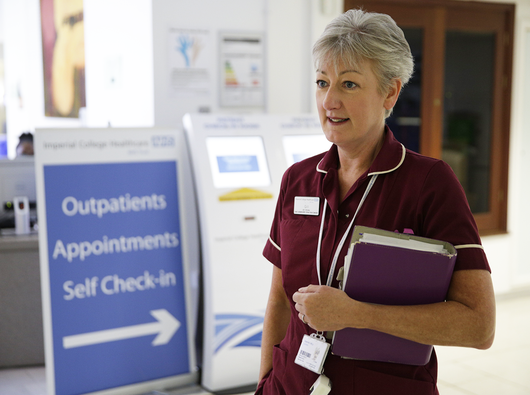
Alongside them, Clinical Nurse Specialists (CNSs) are the cornerstone of blood cancer care. Our community regularly tell us how their CNS provides continuity and support throughout their treatment – often acting as a vital link between professionals involved in a person’s care.
Together with other skilled professionals, they make up the blood cancer workforce and play a key role in driving innovation across the NHS. New treatments are often trialled first in blood cancer, testing how well the system can adopt new technologies.
While these advances are life changing, they are also more complex for the workforce to deliver.
That’s why workforce planning matters for the blood cancer community. We need the right number of skilled professionals, in the right places, with the right expertise. Our UK Blood Cancer Action Plan sets out recommendations to help build a robust workforce; supporting to staff deliver care and ensuring everyone affected by blood cancer can access the best possible treatment.
Pushing the Government to go further
We welcomed the Government’s commitment in 2024 to publish a refreshed NHS Workforce Plan for England and took part in the consultation to ensure the challenges faced by the blood cancer workforce were heard.
In our response, we called for greater capacity in the blood cancer workforce, action to address training gaps, better recording of haematology work, and national standards for staffing and facilities . We also called for accurate workforce modelling to understand current numbers, skillsets and location.
Partnering for impact
Working alongside the British Society for Haematology (BSH), we produced a joint briefing that set out the realities of working in haematology. From gaps in workforce modelling and limited protected time for research, to challenges around recruitment, retention and wellbeing.
This collaboration strengthened our evidence base and, by aligning our response with BSH and the Association of Medical Research Charities (AMRC), we reinforced shared priorities and ensured clear, consistent messages about the blood cancer workforce were repeatedly put to Government.
Making the case in Parliament
In October, Clive Jones Member of Parliament (MP) for Wokingham secured a Westminster Hall debate looking into the impact of NHS workforce levels on cancer patients.
What is a Westminster Hall Debate?
Westminster Hall debates allow backbench MPs from any political party to raise an issue and receive a response from the government.
There’s no vote but they allow MPs to raise awareness of a particular issue or topic and can help to influence change.
Read the full transcript of the debate here

We were pleased to support Clive ahead of the debate and see him reference stark findings from our 2024 survey – 31% of respondents did not know who their CNS was and 22% did not know how to contact their CNS.
Scott Arthur MP for Edinburgh South West also highlighted the challenges facing the haematology workforce, drawing on experiences our community had shared with us. Scott also used his contribution to set out what he hopes the Workforce Plan will achieve for haematology:
I hope that in the upcoming workforce plan the Government recognise the central role that haematologists play in cancer care…having a haematology workforce that is staffed to the correct levels has benefits well beyond cancer care
- Scott Arthur MP for Edinburgh South West
In her response the Minister for Secondary Care addressed specific haematology concerns and outlined steps already taken – which we are following up.
What we want to see to see in 2026
2026 will be a key year for health policy in England. As well as the publication of the Workforce Plan, we are also expecting the National Cancer Plan for England – with the workforce central to its delivery.
Together, these two plans present a crucial opportunity to address longstanding blood cancer workforce challenges and set out a long-term vision for cancer; including blood cancer. We’ll continue to work with healthcare professionals, policymakers and our community to ensure the blood cancer workforce is properly recognised, supported and planned for.
Get involved
If you want to hear more about what we’re doing on the blood cancer workforce in England, Scotland, Northern Ireland or Wales, you can find out more by signing up to our Involvement Network.
Are you a healthcare professional?
Find the guidance you need to support your patients and grow your professional development as well as how you can use your expertise to drive forward clinical and patient-facing projects.