
I’ve been living with CML for a decade, I’m not letting it hold me back
Rachael was diagnosed with chronic myeloid leukaemia (CML) at 25. Ten years later, she’s showing that with adjustments, living with blood cancer doesn’t have to hold you back. Today, she works as a solicitor – a high pressure career she once feared her diagnosis might put out of reach.
I was diagnosed at 25, which for CML is young. At that point in my life, I was mostly focused on my social network. I’d recently moved to London after university, so I was making the most of living there, travel, and holidays.
I’d been travelling in Asia and had a very sharp pain in my leg for the whole trip, which progressed into swelling. I checked into a hospital and they initially thought it was some sort of insect bite or deep vein thrombosis. But as part of those checks, they noticed I had a very high blood cell count – antibiotics weren’t lowering it. I flew home, and the GP did some bloods but thought it was probably nothing serious. I’d had antibiotics, and I had a follow-up appointment to hopefully get the good news my white blood cell count was down.
I just remember the GP’s face dropping when she looked at my blood results on the screen. They were at a very high level, and I was told to go to A&E immediately.
A&E was the first point anyone mentioned the prospect of blood cancer, and at that point in time they still thought it was so unlikely. They ran some more tests and I was told to come back the next day – and that was when they gave me the news I had chronic myeloid leukaemia. It was all happening so fast; I was in a state of shock. I couldn’t process it at all.
Looking back, I’d like to have changed the way that news was delivered to me – it wasn’t particularly sensitive. I feared it was a death sentence, and the actual long-term implication wasn’t really explained. I just felt like I’d been packed off with a very high dose of TKIs and a phone number for a nurse if I had side effects. And of course, I had side effects.
I moved hospitals, and since then they’ve been great, adjusting my dosage of medication to a point I can tolerate with fairly minimal side effects in comparison to the beginning. They gave me the confidence that this was a disease they could treat, it doesn’t need to hold me back. And with all the latest research being funded, not only is it a disease that people can live with, but it’s one that will become easier with time, with experts working on it.

I think one of my initial stages of grief was, ‘Oh God, I’m not going to be able to do X, Y and Z now.’ It scared me to think I might no longer be able to pursue a high-pressure career. But then having the emotional and cognitive thought process of thinking, ‘No, I’m going to still do that in spite of it,’ has maybe led me to be more motivated to do certain things.
This is a hurdle, but it’s not a hurdle that’s going to hold me back.
My diagnosis can come as a shock to people that I’m working with, they can’t always wrap their heads around it. I’ve told managers and closer colleagues, but for the most part I haven’t needed to mention it. For all intents and purposes, I don’t look like I have anything wrong with me. I take medication and have regular blood tests and monitoring, and I’ve been lucky to work for companies that understand when I need to go to hospital appointments. I probably do need to be more conscious of the rest that I’m able to achieve in comparison to my peers.
I don’t want to come across that I’ve mastered balancing treatment, my health, and career, because it’s something I need to prioritise and reprioritise on a weekly basis. But my CML has given me a wake-up call. I have to prioritise my health above all things to make sure that I can do anything else in my life.

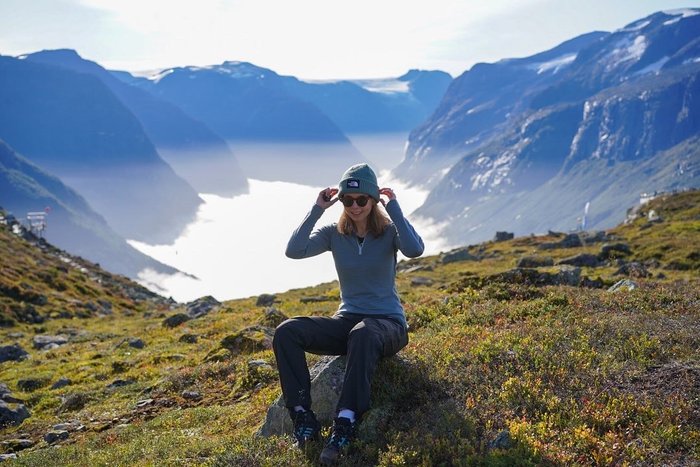
I still weightlift at the gym, none of my instructors know I have anything wrong with me, I’m keeping up with everyone else. I still travel. For me, it’s about living the life I want to live, even though I have a health condition in the background. It hasn’t held me back from anything that I wanted to achieve.
My CML diagnosis at a young age has given me a broader perspective. I was prioritising my career above everything, like spending time with family for example. I think it’s given me a bit more balance.
Blood cancers can be misunderstood – people can either dismiss it or think you’re on your last leg. For me, it’s just about awareness, knowing that people can still live full, active lives and have high pressure jobs with that support. If you’re diagnosed with a chronic blood cancer too, it doesn’t need to be the end of your ambitions. It’s just something you learn to live with and work around. It can bring a unique perspective and resilience.

Share your story about living well
Your experience can help others with blood cancer