
My mom taught me to nurture things, and I keep that energy with me
Nicholas recounts how his mom Lesley faced the "coming storm" of acute myeloid leukaemia – one of the hardest to treat blood cancers.
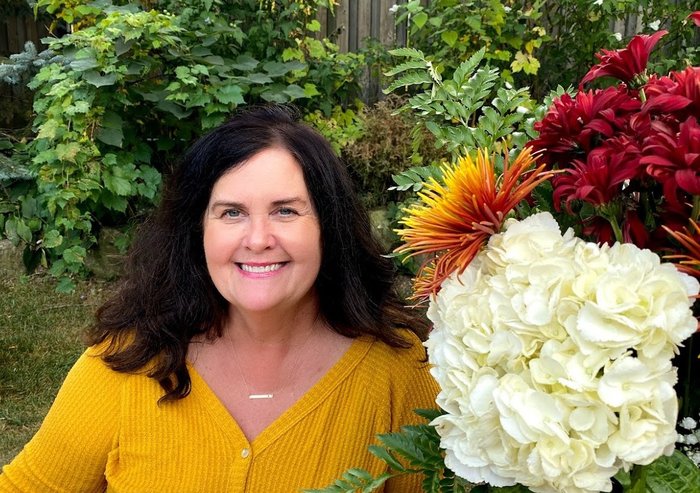
Nicholas' mom Lesley
My mom loved her garden. It stretched over 100 feet, was filled with trees, a pergola, and carefully planned blooms for every season… flowers suddenly popping up when it was their time. And the hydrangeas. She had them everywhere – they were my mom’s favourite flower.
My mom taught me how to feel proud when something blooms. She’d say “you did that, Nicholas. That is because of you, because you nurtured that”. She taught me how to nurture, that if you take care of things, they will turn into something beautiful.
It was the summer of 2020 that my mom was diagnosed with acute myeloid leukaemia.
It almost felt like there was a storm coming and it was heading straight towards us.
Jessica, my sister, who works in oncology was the one that came over to the house with my mom’s biopsy results and her eyes were red, she had been crying in the car. The moment I saw her, I knew it wasn't good.
My mom was in disbelief and shock. She’d already been through cancer 11 years before and she didn't think she'd have to do it again. It almost felt like there was a storm coming and it was heading straight towards us.
We lived in Canada, and my mom was fortunate enough to be able to afford a new type of drug, not yet covered by the Canadian healthcare system. Remarkably, it worked. She went into remission, and the next step was the bone marrow transplant. Because of how vulnerable patients are during this stage, I couldn’t see her for about four weeks. It was really tough for her – the chemotherapy caused hallucinations, pain, and nightmares.
A moment of hope
Then in the middle of this storm, there was a moment of real hope. The usual sibling donor match is about 30%, but it turned out my mom’s sister, Tammy was a perfect 100% match. That was amazing.
She responded well to treatment and was discharged earlier than expected, after just three and a half weeks. She recovered at home and passed the critical 100-day mark.
Over the next few months things began to change
The cloud of graft-versus-host disease (GvHD) had been hanging over us – we’d been told to expect it, and were waiting for it to hit. And it did, but only mildly. Sore mouth, skin rashes – the expected indicators that the transplant had taken.
But then things began to change. My mom became short of breath. In May 2021 we were told the GvHD had spread to multiple organs, including her lungs.
What is graft-versus-host disease (GvHD)?
GvHD is a serious complication that can occur after a stem cell or bone marrow transplant. White blood cells from the donor (the graft) view the recipient's body (the host) as foreign and attack healthy host cells, causing widespread inflammation.
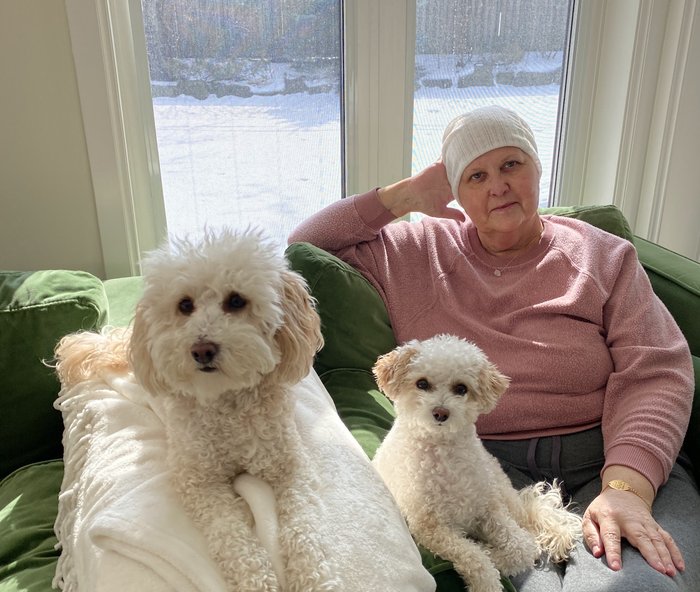
Lesley during treatment
Even during those difficult times, we made memories together
There were long walks by the water, time spent with the dogs, and day trips to get out of the house. One of our most special experiences was visiting filming locations from Schitt’s Creek, a show we both loved, just outside Toronto. We drove there, listening to ABBA the whole drive, toured the motel, the shops, and all these places we knew from the show.
In November, my mom was admitted to ICU, where she spent five days. She had developed severe fungal and bacterial infections in her lungs, alongside advanced GvHD.
Her condition was critical. We were told she might not make it through the weekend.
My mom passed away on November 30th surrounded by her children.
Mom was the centre of our family
My mom was the glue that held us together, and when she passed away, that foundation broke us. She was the solid ground for us kids. This changed our dynamic and made us appreciate the relationships between us. It is very common in families after a loved one passes, either this dynamic falls apart or unifies them. Thankfully, we became more unified.
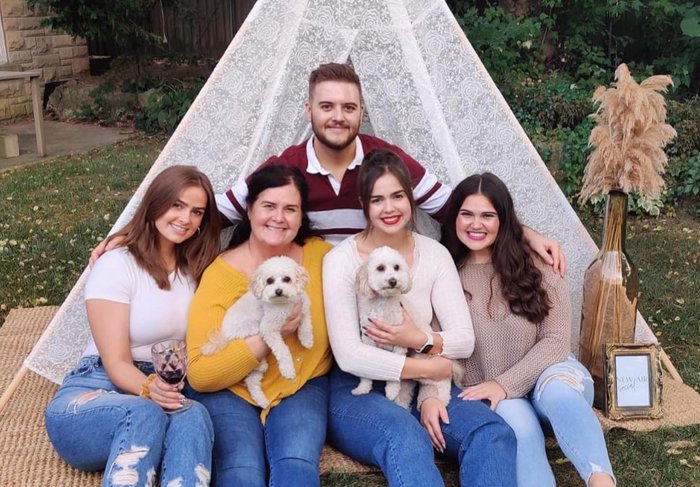
Nicholas with his mom and sisters
I remember selling our family home. My mom's energy used to radiate from that house – that love, that lightness, that colourfulness, it just wasn’t there anymore. The house just felt empty.
I think in a way, that was the first time we had to accept that our mom was gone. And despite our unity as siblings, my life was headed in a different direction and needed a massive change to heal. I moved to Scotland, where my mom was born and lived as a child, and while I’m here, I still feel the connection to my mom and my sisters – and appreciate that connection.
Walking in honour of my mom
I decided to do a Walk of Light to honour my mom. Me and a group of friends all took part. We raised nearly £500 towards blood cancer research. It was a beautiful way to remember her.
Research will beat blood cancer
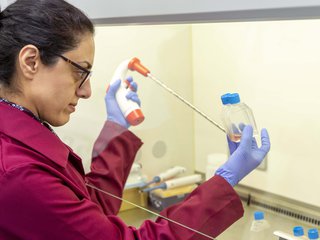
Nicholas's walk will have supported Blood Cancer UK funded researchers like Dr Kriti Verma. Her research aims to identify patients at risk of GvHD earlier, before symptoms become severe, and could lead to more personalised treatments in future.
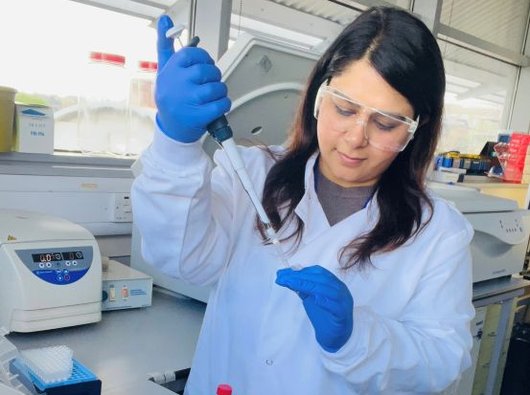
Dr Kriti Verma in the lab
I asked my friends to wear colours she loved – bright tones, earthy greens, blues, pinks. I listened to the music she loved while I was getting ready, and we walked along the beach, because she loved the water. We stopped for coffee, sandwiches, and cookies along the way – the small things that brought my mom joy.
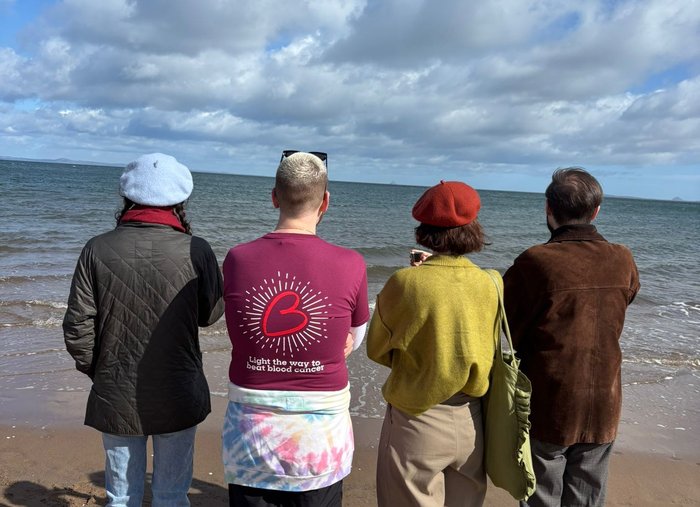
Nicholas taking on the Walk of Light with friends
I wore her favourite sweater around my waist. I had little mementos, a little bit of crystal bracelets that she had bought me, and my anchor necklace with her ashes inside – little things to remind me of her. I just felt her everywhere on that walk.
I remember her in everything I do
Through gardening, through her recipes (her carrot cake was unmatched), through walks in nature and enjoying a cup of coffee.
We have a path near us called Water of Leith in Edinburgh, it’s very calm, and in the summer everything's blooming, like my mom’s garden used to. I listen to the birds chirp, and look out for the butterflies. My mom always said, “when you see a butterfly, think of me – I'm that butterfly”.
Because we've been beating blood cancer since 1960
We’re a community determined to beat blood cancer. We do this by funding research that takes us closer to a cure.