
My rebellious twin sister never did anything quietly
Katie's loud music and endless mischief left a lasting impression on everyone she met. Sophie shares the story of her rebellious twin sister, and the shock blood cancer diagnosis that rocked their family.
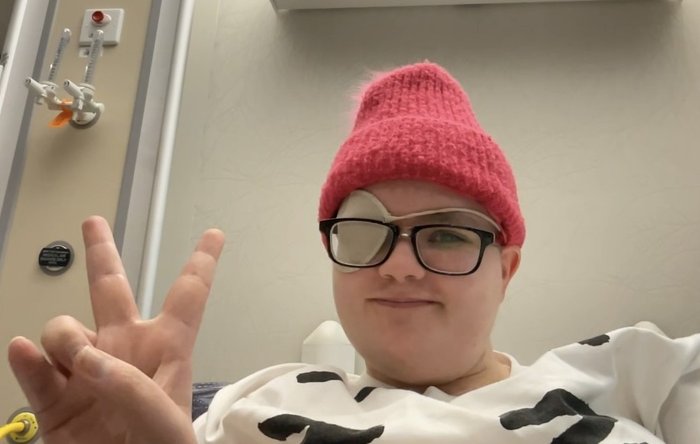
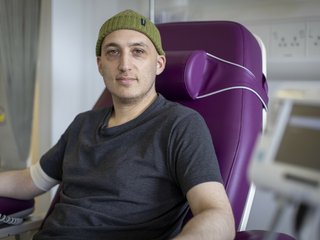
Katie during treatment
Katie was my twin sister. She was very sassy, very passionate. She had this trademark eye roll and finger point she’d give to anyone she’d decided needed telling off.
You knew my sister was in the house because she’d have her speaker blaring music as loud as she possibly could. She’d do things like go out in her flip-flops in the middle of winter to go do something she probably shouldn’t be doing – like getting loads of tattoos.
There was always some mischief going on with her.
I always found it funny because I’d inevitably get pulled into the gossip somehow and ended up having to help her get out of it. Katie always knew she was the rebel child, and we all loved that about her.
My sister was finding her feet in the world
Katie had autism, and working a steady job had always been challenging for her. Then she found a job at Ocado, working in the warehouse. It was the first time she'd actually enjoyed going to work.
She'd always moan about the early starts, but she’d be up bright and early at 4.30am, set off on her bike, and do her 10 hour shift every day. I think she'd finally started to find her feet in the world.
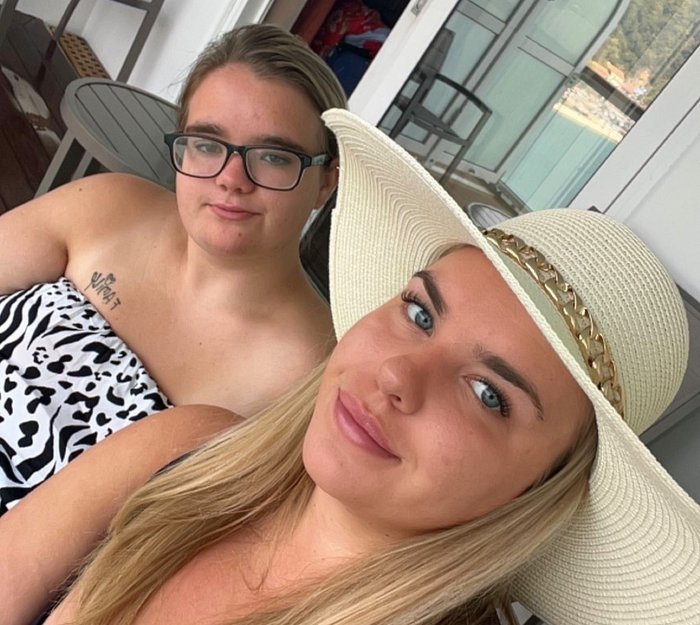
Katie and Sophie
Realising something wasn’t right
I remember Katie started feeling really bloated. She couldn't eat anything and her stomach hurt. Working in a warehouse, in a physical job – I think that meant that she couldn’t ignore it.
The doctors said she had sciatica and sent her away with antibiotics.
We were back at the doctor’s days later, things weren’t getting any better. Next it was “we'll send you for some intolerance tests”.
That night I could hear my sister from my room, crying in agony.
I remember saying to her “This is not right. They think you have an intolerance, but even if you did, you wouldn't get this sort of pain from drinking a glass of milk”.
We took her to A&E in Basildon and she was admitted immediately.
The doctors couldn’t make up their minds on what the issue was. It was “oh, she might have ovarian cancer, or she might have this… she might have that”. The diagnoses were all over the place. Then after a couple of weeks we were finally given the news that she had Burkitt lymphoma, a rare type of aggressive blood cancer.
Because of Katie’s fast decline in health it was decided that she would be blue lighted to UCLH specialist Haematology ICU, as they could provide the best care and give her the best chance.
Treatment was incredibly tough on my sister
At the start, Katie was put into a coma for four weeks. She had a tracheotomy and spent 150 days in critical care. She wasn't responsive at times. Eventually she came out of critical care and started to be rehabilitated.
She had many rounds of highly toxic chemotherapy whilst in critical care and the months whilst she was in UCLH.
I think if my sister had been diagnosed earlier, she’d have had a better chance than she did – by the time she was diagnosed, the cancer had already spread.
At that point she decided to shave all her hair off for charity. She’d been through phases of not being able to walk or talk. We had to take her around in a wheelchair everywhere because she couldn't walk very far.
It seemed for a time that she was getting better – she’d started using crutches to get around. We were even able to have a relatively normal Christmas together at home, but her healthcare team told us to enjoy every moment together, because we couldn’t know what might happen in future.
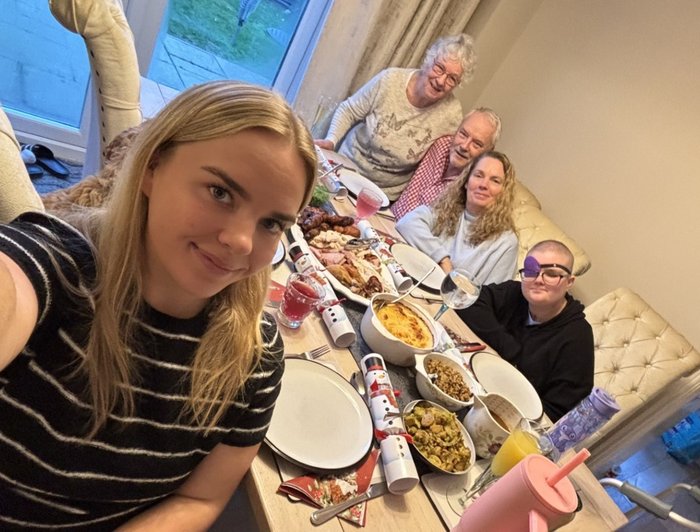
Celebrating Christmas together
A clinical trial gave us hope
In September 2025 Katie was given the all-clear but in that same week complained of a pain in her eye. After several scans it showed that the cancer had spread to her brain. The doctors told us she was running out of treatment options.
There was a new drug called glofitamab that had only been tried on three other people but wasn’t yet available on the NHS. My family decided that we’d try it through private healthcare, and my sister was able to go on a clinical trial and receive this brand new treatment.
We hoped it would work, but it wasn’t enough. Katie passed away in February 2026 at home, aged 22.
Katie made a lasting impression on many people she met, especially at UCLH where everyone knew her by name – she now has a memorial bench in her name on the family and patient rooftop garden. Some of her work friends also attended Katie’s funeral, where they gave us a book of condolences. There’s now a memorial bench for Katie at the place she worked, a place where she was happy.
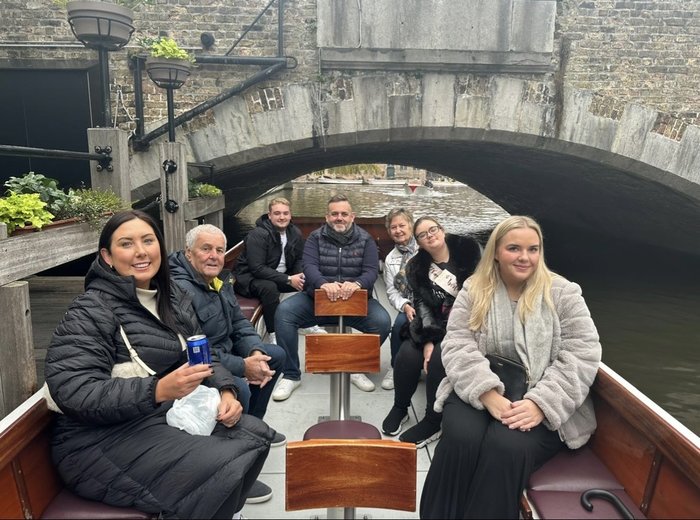
Katie with some of her family
What my sister’s diagnosis taught me
If there’s one thing I’ve learned from our experience, it’s that you know your body better than anyone else. I think if my sister had been diagnosed earlier, she’d have had a better chance than she did – by the time she was diagnosed, the cancer had already spread.
Even if the doctors are telling you it’s nothing serious, you should keep fighting your case.
Research will beat blood cancer
Two weeks after my sister passed, and a year to the day of her diagnosis, me and six of my friends did the Walk of Light in London. We did our bit to raise money towards blood cancer research – we decorated our numbers, we wore fairy lights, and we pinned her photo to the board with a message for Katie. It was a lovely way to remember her, but in an ideal world we’d have had her there with us.
Grief is very weird. It takes time to sink in. I still don't really think it has sunk in yet. The whole thing has been a bit of a rollercoaster. Without Katie there, blaring her music, it feels very quiet in the house.
Our family has come together because of it. And in a roundabout way, I think that’s probably what my rebellious, mischievous, unique twin sister would have liked.
Donate today to help us beat blood cancer
With your support we will develop new treatments for all types of blood cancer. Help fund our vital research today.