New trial shows early signs that ‘off-the-shelf’ CAR T-cell therapy could transform treatment of myeloma
United Kingdom
Research presented today (Tuesday 8th December) at the American Society of Hematology Conference in Florida, has shown that a new kind of CAR T-cell therapy, which generates CAR T-cells inside the body, could offer a faster, easier and more accessible way to treat people with myeloma, who’s disease has returned or hasn’t responded to previous treatment.
The early research comes from the inMMyCAR study, a first-in-human phase 1 trial taking place across centres in Australia.
Myeloma is a type of blood cancer that is currently incurable, with patients going through periods of remission before their cancer inevitably comes back. Myeloma affects plasma cells in the bone marrow and symptoms can include bone pain as well as fatigue and nausea. Currently, blood cancer is the UK’s third biggest cancer killer, taking 15,000 lives every year.
In the study, the researchers tested an investigational treatment called KLN-1010. Unlike current CAR T-cell therapies, which require weeks of bespoke laboratory work and strong chemotherapy to prepare the body, this new approach uses an intravenous infusion that contains a virus which finds T cells in the bloodstream and inserts the CAR gene to them, creating CAR T-cells inside the body
This means people may not need weeks of intensive treatment to prepare themselves for CAR T-cell therapy, which can include blood cell collection via a machine, and strong chemotherapy. Making CAR T “off-the-shelf” is something researchers around the world have been working towards.
For people who may face this kind of treatment in the future, that could make an immense difference.”
- Jacquie Hellowell who has previously received CAR T-cell therapy
So far, three people have been treated in this early phase 1 study, and all three achieved MRD-negative responses at one month, meaning no cancer was detectable. Researchers measured several blood markers and study participants continued to respond to the treatment over time. All three remain in remission, with no disease progression reported.
The people taking part, aged 61–72, had all received at least three previous lines of treatment and had high-risk disease.
Although early, the results suggest this treatment can quickly create CAR T-cells in the blood without chemotherapy. CAR T-cell levels peaked around day 15, and memory CAR T-cells stayed in both the blood and bone marrow for up to three months.
A patient perspective
Jacquie Hellowell, was 59 when she had CAR T-cell therapy for blood cancer. She spoke about the importance of this new therapy.
“As someone who received a current CAR T-cell therapy for another aggressive type of blood cancer, I remember so clearly the parts of the process that had the biggest impact on me as a patient. My T-cells had to be collected and then sent abroad to be engineered, and there was a long four-week wait for them to come back to the hospital. I also knew the pre-treatment chemotherapy would wipe out the antibodies I’d built up over a lifetime.
“The idea of an ‘off-the-shelf’ CAR T-cell therapy being created inside the body, feels incredible to me. If you could avoid cell collection, the overseas manufacturing, and the strong chemotherapy, the whole preparation for treatment would be completely different. And if this approach can still produce the trained T-cells needed to kill cancerous cells, the recovery afterwards could be very different too. For people who may face this kind of treatment in the future, that could make an immense difference.”
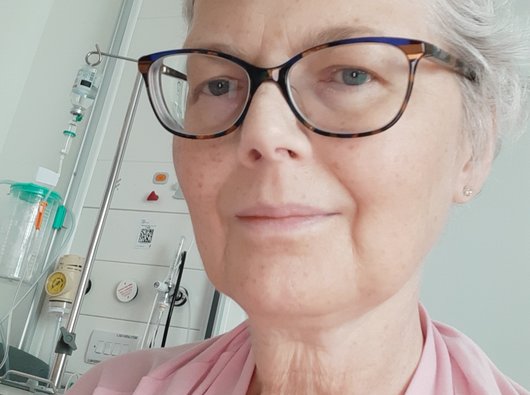
Jacquie Hellowell
Richard Francis, Deputy Director of Research of Blood Cancer UK, said:
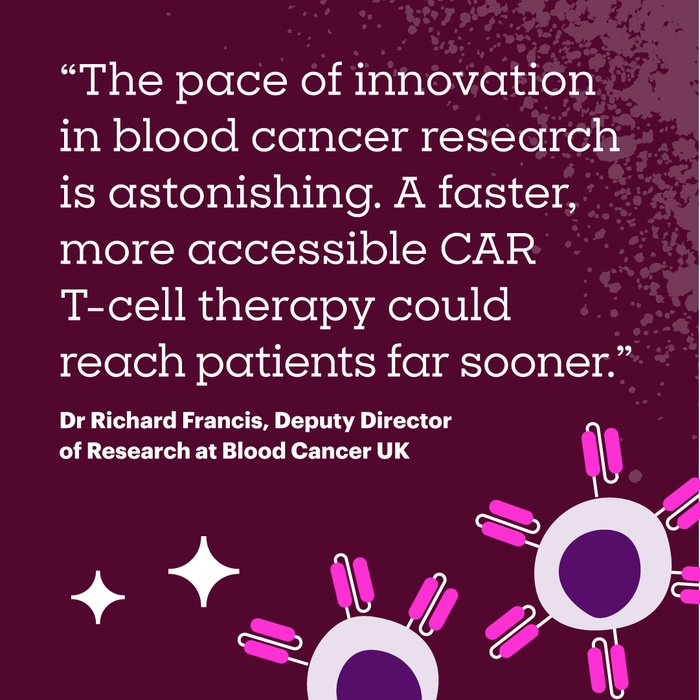
“The pace of innovation in blood cancer right now is astonishing, and as blood cancer is the UK’s third biggest cancer killer, it’s imperative we don’t let up. CAR T-cell therapy has changed the lives of many people with blood cancer, but it’s still out of reach for too many because it can take a long time to manufacture, involves complex lab work and toxic chemotherapy. This new approach could remove many of those barriers and seeing a CAR T-cell therapy, which generates CAR T-cells inside the body, showing such encouraging early results in people is incredible. While these results involve only three people, they show what could be possible: a faster, more accessible CAR T therapy that could reach patients far sooner - we’ll be watching this research very closely as it develops.”