
Today we launch our mission to double survival chances for the deadliest blood cancers
Trial Treat Beat is a landmark £25million appeal to double survival chances in the deadliest blood cancers, including high-risk myeloma, high-risk lymphomas and acute myeloid leukaemia (AML). The appeal is to fund groundbreaking clinical trials; the trial design has already shown transformative results in prostate cancer and is the first time in the UK they’re being used for these types of blood cancer.
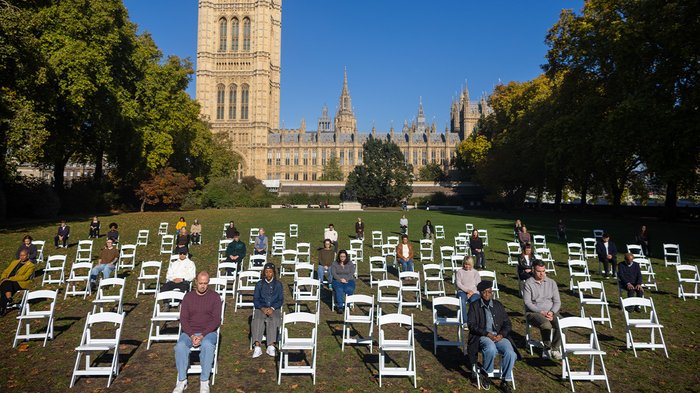
People affected by the deadliest blood cancers sit among 99 chairs, representing the 1 in 3 who survive.
The outlook remains devastatingly low for the deadliest blood cancers
Whilst the UK’s overall cancer survival has risen to the highest level on record, the outlook remains devastatingly different for those affected by some of the deadliest blood cancers including acute myeloid leukaemia, high-risk lymphomas and myeloma.
Blood Cancer UK-funded analysis of more than 413,000 blood cancer cases reveals that five-year survival rates for acute myeloid leukaemia – one of the deadliest blood cancers - improved by just 3 percentage points over an entire decade. In England, survival rose from 21% in 2009–14 to just 24% in 2015–19; progress was similarly limited across Scotland and Wales.
Blood cancer is the third biggest cancer killer in the UK and the fifth most common cancer. Currently only 1 in 3 survive the deadliest blood cancers.
Today, Blood Cancer UK is determined to change that – launching Trial Treat Beat – a landmark £25 million appeal to double survival chances using innovative trial design that is being used for the first time for these types of blood cancer.
These trials have previously shown transformative results in treating prostate cancer. For the thousands of patients with the deadliest blood cancers, who have waited a long time for some progress, Blood Cancer UK says the time for waiting is over.
To mark the launch, ninety-nine chairs have appeared in central London – with two in every three left empty, representing the patients who don’t survive the deadliest blood cancers.

Every empty chair represents a person, a family, and a future that was taken away by the deadliest blood cancers.
New consumer research released alongside the launch reveals the scale of public unawareness driving this crisis – more than a third of Britons (34%) wrongly assume cancer survival has improved equally across all types, and 41% have no idea of the devastating survival rates facing patients with the deadliest blood cancers.
Helen Rowntree, CEO of Blood Cancer UK says:
“For too long, people with some of the deadliest blood cancers have been left behind by progress. Through Trial Treat Beat, we’re investing in groundbreaking clinical trials that could double survival chances for thousands of people across the UK. With the public’s support, we can give more people the chance of life after a blood cancer diagnosis, and families more time with their loved ones.”
Dr Rubina Ahmed, Director of Research at Blood Cancer UK says:
“These can be incredibly difficult diseases to treat, and we need to find effective new treatments, faster. Trial Treat Beat gives us the opportunity to test promising treatments in a smarter way, so we can identify what works and focus our efforts where they can make the greatest difference for people affected by blood cancer.”
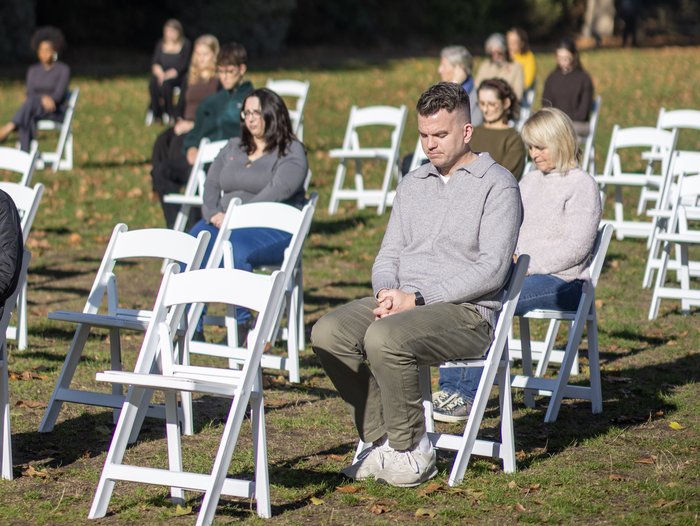
Lee Williams, pictured at the launch of Trial Treat Beat.
Lee Williams, whose life has been turned upside down by blood cancer, said:
“I’ve seen first-hand what blood cancer can take away. In just over a year, I lost my mum, a relative and a friend to this disease.
It’s impossible to describe what it feels like to lose a parent. The speed at which the tide turned on Mum and our family was crippling.
I’m supporting Trial Treat Beat because I don’t want other families to have to go through what mine did. We need to keep pushing for better treatments, better survival rates and, one day, a cure.”

Trial Treat Beat: our mission to transform survival
Right now, only 1 in 3 people with the deadliest blood cancers will survive. But we have a £25 million plan to help change the odds.