
A new way of treating acute myeloid leukaemia (AML) in older people by reducing inflammation
We still don’t fully understand why older people are more likely to develop AML and why it can be harder to treat. Dr Valletta will study whether using drugs that can block inflammation alongside traditional drug treatments will help older people with AML respond better to treatment.
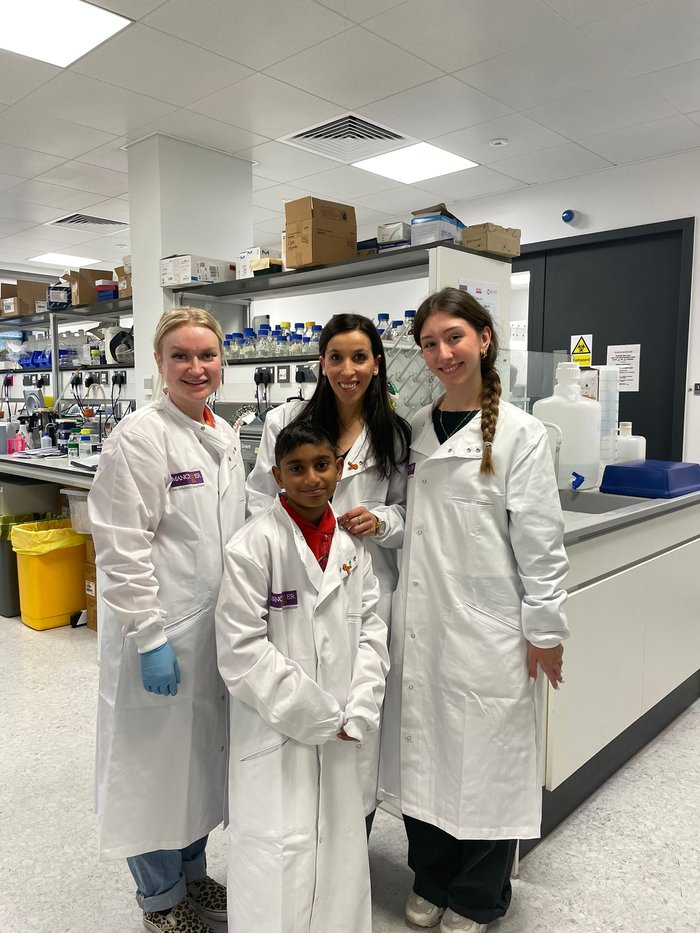
Dr Simona Valletta in the lab
The challenge
AML is an aggressive form of blood cancer which can be very difficult to treat. with Approximately three quarters of people diagnosed with AML are aged 60 and over. Intensive chemotherapy is still the main treatment option, but for many older people this treatment is too harsh and can’t be tolerated. While research is being carried out into new drugs, these also aren’t always suitable for older people.
We still don’t fully understand why older people are more likely to develop AML and why it can be harder to treat. Researchers believe it’s likely that it’s linked to the aging process and how as we get older our bodies are less able to deal with damage. Our bodies respond to damage by activating a healing process that we call inflammation. This process disappears once damaged cells have been repaired. But as we get older our cells don’t repair as well as they do when we are younger and activation of the healing process can cause many older people to experience constant prolonged inflammation. So far researchers have not found a way to combine lower intensity therapy, normally used in older people, with a drug that can help to regulate inflammation.
The project
In this project, Dr Valletta and her team at University of Manchester will study whether using certain drugs that can block inflammation alongside traditional drug treatments will help older people with AML respond better to treatment. They plan to test new drugs called p38MAPK inhibitors that are able to block specific proteins which cause inflammation in combination with another AML drug treatment called AZA. They will perform experiments in the lab to see if this can help to destroy the cancer cells and reduce levels of inflammation. They also plan to look at the environment of the leukaemia cells to see how this may be helping the cancer cells to grow in number and thrive.
The future
If, Dr Valletta’s research is successful, this could lead to the development of a new treatment that is tolerated by older people with AML. They hope this project will give them the data they need to conduct a large clinical trial where they can test this further in a clinical trial. This new treatment has the potential to improve quality of life for many people with the disease in the future.