
Breaking down a protein that myeloma needs to survive
Myeloma is a type of blood cancer that can be treated but unfortunately can’t be cured. Dr Adrain wants to find new ways to target a protein that myeloma cells rely on to survive, with the hope of developing new treatments for people whose cancer has stopped responding to existing drugs.
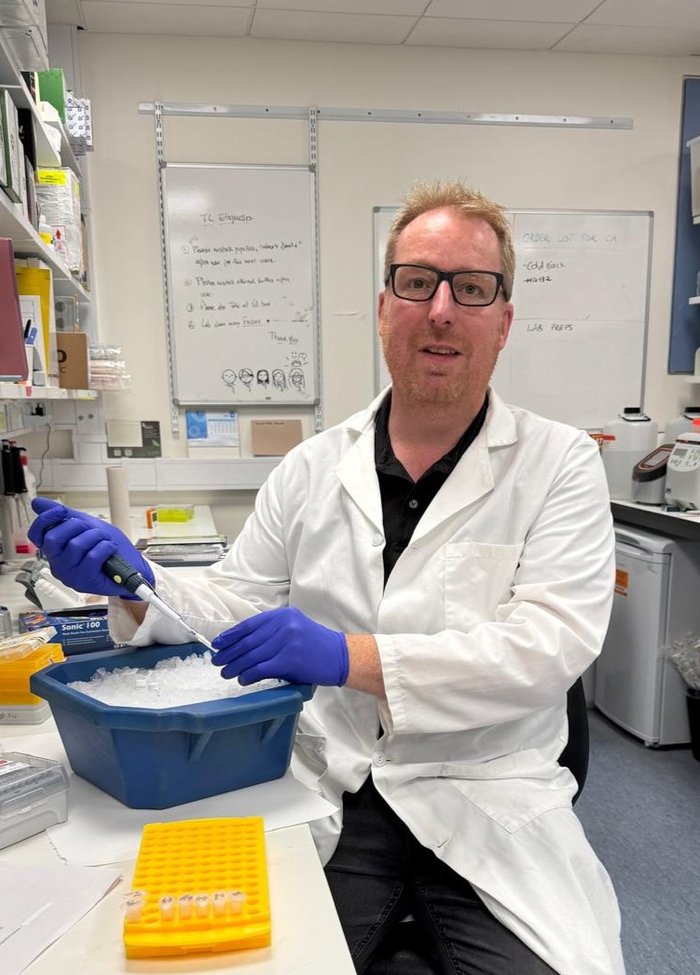
Dr Colin Adrain
Project information
- Lead researcher
Dr Colin Adrain, Queen's University Belfast
- Research team
-
- Related conditions
-
- Myeloma
- Research type
-
- Non-clinical
- Region
-
- Northern Ireland
- Grant awarded
-
- Innovative Pilot Grant
- Status
- Ongoing
- Funding award date
- April 2026
- Amount awarded
£29,582
- Project completion date
- March 2027
The challenge
Myeloma is a type of blood cancer that starts in the bone marrow, the soft spongy tissue inside our bones where blood cells are made. Myeloma cells rely on high levels of a specific protein called IRF4 to stay alive. If IRF4 levels drop, myeloma cells usually die. Some treatments work by lowering IRF4 levels indirectly, but over time the cancer can stop responding to these drugs, levels of this protein rise again and the cancer comes back.
The project
Dr Adrain and his team will study a new protein called midnolin, which has the ability to break down IRF4 inside cells. They have found that midnolin exists in two forms. One form is effective at breaking down IRF4, while the other is much weaker. They believe that in myeloma cells, the weaker form is more dominant, which means IRF4 levels stay high and the cancer cells survive.
The team want to develop two new laboratory experiments to understand this. The first experiment will allow them to see how strongly each form of midnolin attaches to IRF4 inside myeloma cells. The second will show which form of midnolin a cell is producing. Together, these tools will help the researchers identify ways to boost the more effective form of midnolin, increasing its ability to break down IRF4 and kill myeloma cells.
The future
If successful, this research could be an important first step towards the development of a new type of treatment for myeloma that works when existing drugs have stopped working. In the longer term, finding ways to directly target IRF4 through midnolin could give people with myeloma a better chance of responding to treatment for longer.
Find out more
Our research
Thanks to our blood cancer community, we've invested over £500 million into research since 1960. Our discoveries have led to better and kinder treatments, and transformed lives.

Support for you
Get free support from our specialist nurses, join our online community and access information you can trust.

Blood cancer types
Understand all the different types of blood cancer and find information and support.

Clinical trials
Clinical trials are how new treatments are developed and improved. Find information and support at every stage of your journey.