£

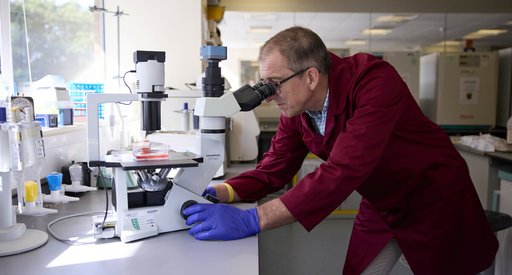
Graft-versus-host disease is a dangerous complication of stem or bone marrow transplant. Professor Paul Moss wants to understand more about the disease so we predict who might develop it.

Project information

Lead researcher

Professor Paul Moss, University of Birmingham

Research team
  • A team at University of Birmingham
Related conditions
  • Root condition
Research type
  • Non-clinical
Region
  • The Midlands
Grant awarded
  • Programme Continuity Grant
Status
Completed
Funding award date
April 2019
Amount awarded

£300,000

Project completion date
June 2023

The challenge

Stem cell transplants are valuable treatments for people with blood cancer, providing an entirely new, healthy blood system from a donor that can kill off the cancerous blood cancer cells.

But sometimes the donor cells can also start attacking healthy tissues. This is called graft-versus-host disease (GvHD), which can be life-threatening. GvHD develops within two weeks of a stem cell transplant, but we currently don’t know what happens in the body during this time.

The project

A previous Blood Cancer UK funded research project led by Professor Moss found that two types of immune cells, called NK cells and T cells, play an important role in the first two weeks following stem cell transplant.

The team found that the numbers of these cells can help predict if GvHD will develop, or if the blood cancer will return after transplant.

The team are now carrying out a detailed study of donor blood cells two weeks after they have been transplanted. They are looking for cells that can kill blood cancer cells and want to find a way to use these if the initial stem cell transplant doesn’t work.

They are also looking at donor blood cells that have caused GvHD in the skin to find out how tissue damage develops.

tba

- tba

The future

In the future, the team plan to develop a ‘risk score’ that will predict the likelihood of GvHD developing following stem cell transplants, which will help medical professionals decide the best course of treatment for each person.

Help us beat blood cancer by funding a research project

  • Could help eight people newly diagnosed with blood cancer understand their condition.
  • Could help researchers study blood cancer cells to develop new treatments and improve early diagnosis.
  • Could help scientists identify genetic patterns in tumour samples to better understand how genes contribute to the development of blood cancer.
Donate