£

Researchers have found molecules that block a specific protein which many blood cancers rely on to grow and survive. Dr Mihkel Örd wants to understand more about these molecules so that new and better treatments can be developed with less side effects for people with blood cancer.

Project information

Lead researcher

Dr Mihkel Örd, University of Cambridge

Research team
  • A team at University of Cambridge
Related conditions
  • Root condition
Research type
  • Non-clinical
Region
  • East Anglia
Grant awarded
  • Innovative Pilot Grant
Status
Ongoing
Funding award date
January 2025
Amount awarded

£30,000

The challenge

Blood cancer is the fifth most common cancer in the UK, with around 40,000 people diagnosed every year. Thanks to research, survival has improved a lot over the past 40 years, with the development of more targeted therapies that block specific proteins, which the cancer needs to grow.

But not all blood cancers can be treated this way, and sometimes blood cancer can become resistant to these drugs. Recently researchers have found molecules that block a specific protein called cyclin D3. Many blood cancers rely on this cyclin D3 to grow and survive, whereas most healthy cells use a different cyclin protein.

The project

In this project, Dr Örd and his team at the University of Cambridge want to understand exactly how these molecules stop the cancer cells from being able to grow and multiply.

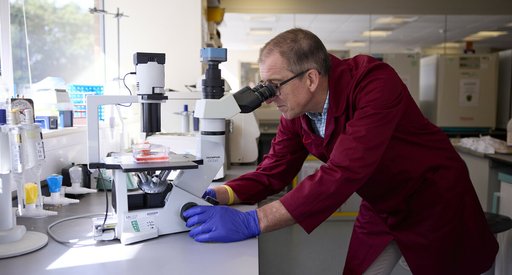
They will conduct experiments in the lab to find out which blood cancers are most likely to respond well to this treatment, as well as working to improve the molecules to make them even better at blocking cyclin D3 which the cancer cells need to grow and survive.

They will also test to see if these new molecules can work well alongside existing drugs that are already used in other cancers to make treatments even more effective.

The future

Ultimately, the researchers hope to be able to develop a new drug in the future that offers a better treatment for blood cancer with fewer side effects.

While developing a new drug can take many years, Dr Örd and his team are also exploring whether existing drugs used to treat other cancers could be adapted to treat blood cancer.

If successful, this could bring life-changing treatments to patients much sooner.

Help us beat blood cancer by funding a research project

  • Could help eight people newly diagnosed with blood cancer understand their condition.
  • Could help researchers study blood cancer cells to develop new treatments and improve early diagnosis.
  • Could help scientists identify genetic patterns in tumour samples to better understand how genes contribute to the development of blood cancer.
Donate

Funding

This project is part of the innovative pilot grant round.