
Growing a spleen in a dish to understand how it protects leukaemia cells from treatment
Chronic lymphocytic leukaemia (CLL) can be treated but currently cannot be cured. It’s thought that one reason for this is because the cancer cells can hide inside the spleen. Dr Lisi-Vega has developed a new way to grow spleen tissue in the laboratory to understand how the spleen helps cancer cells survive.
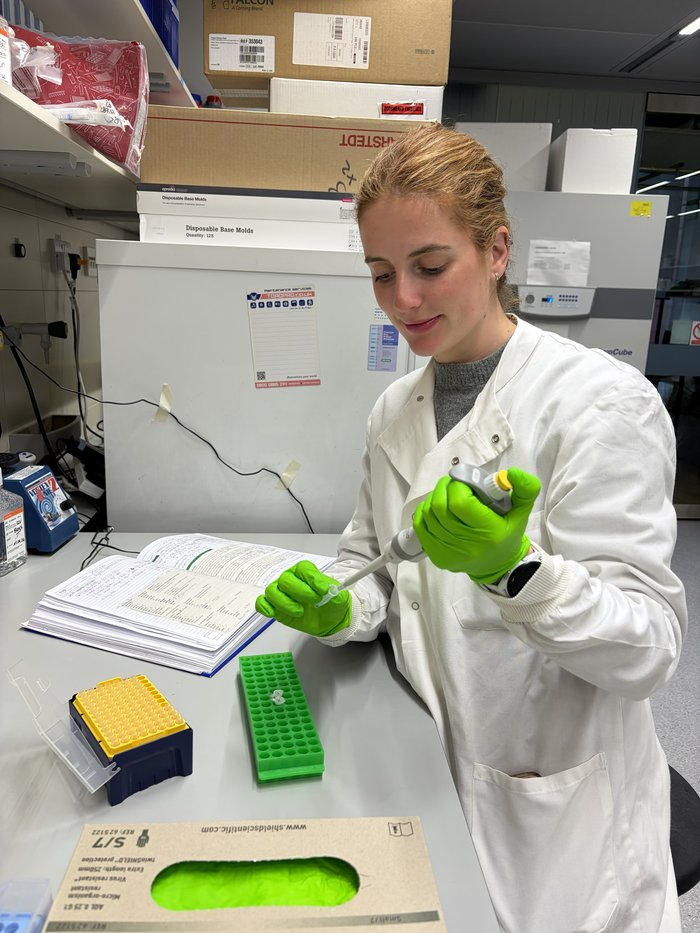
Dr Lisi-Vega
Project information
- Lead researcher
Dr Livia E. Lisi-Vega, University College London
- Research team
-
- Related conditions
-
- Chronic lymphocytic leukaemia (CLL)
- Research type
-
- Non-clinical
- Region
-
- London
- Grant awarded
-
- Innovative Pilot Grant
- Status
- Ongoing
- Funding award date
- April 2026
- Amount awarded
£28,778
- Project completion date
- March 2027
The challenge
Chronic lymphocytic leukaemia (CLL) is a type of blood cancer that affects white blood cells called lymphocytes. In people with CLL, these lymphocytes don’t work properly and grow too fast. This type of blood cancer currently has no cure. One reason for this is because the cancer cells can hide in the spleen (an organ that helps fight infection). The spleen often becomes enlarged in people with CLL and can act as a hiding place for cancer cells, helping to protect them from treatment. Many people with CLL who have an enlarged spleen also tend to respond less well to treatment, but we do not yet understand why this is. One reason this has been difficult to study is that current methods for growing spleen tissue in the laboratory fail within days. This makes it almost impossible to investigate the spleen's role in protecting cancer cells.
The project
Dr Lisi-Vega and her team have developed a new way to grow spleen tissue in the lab. Unlike previous methods the spleen tissue stays alive for a long time, over a year in some experiments. This breakthrough makes it possible to study the spleen in ways that were not possible before. Previous experiments have shown that leukaemia cells are better protected from a standard treatment drug when grown alongside this spleen tissue, suggesting the spleen plays an important role in helping cancer cells resist treatment. In this project, they will study this tissue in detail to understand exactly how the spleen protects cancer cells and identify new ways this protection could be overcome.
The future
If successful, this research could help explain why some people with CLL respond less well to treatment. In the longer term, it could help us to understand how the spleen helps cancer cells to hide. This could lead to the development of new treatments that improve outcomes for people with this disease.
Find out more
Our research
Thanks to our blood cancer community, we've invested over £500 million into research since 1960. Our discoveries have led to better and kinder treatments, and transformed lives.

Support for you
We’re here for anyone worried about or affected by blood cancer. Call our free blood cancer support line, email us or join our online community.

Blood cancer types
Understand all the different types of blood cancer and find information and support.

Clinical Trials Support Service
Find out how our Clinical Trials Support Service can help you.