
Identifying the tiny cells that causes AML to evade detection and survive
Research project investigating a new method that could help ensure all cancer cells are destroyed.
Despite current chemotherapy treatments, many people with acute myeloid leukaemia (AML) often see their disease return. Professor Tonks plans to investigate a new method that could help ensure all cancer cells are destroyed and the cancer is unable to come back.
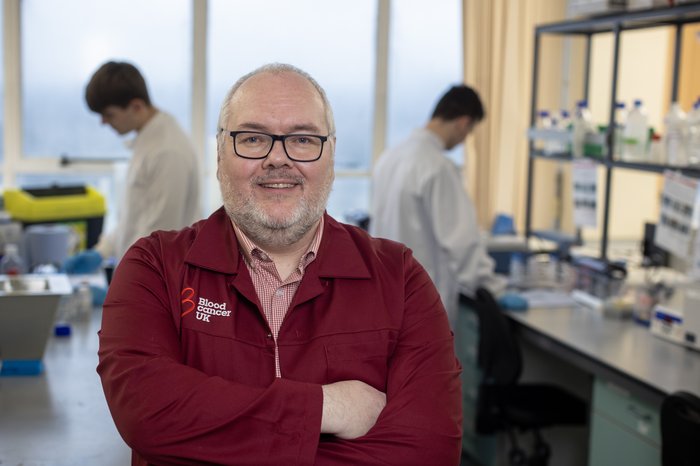
Professor Alex Tonks
Project information
- Lead researcher
Professor Alex Tonks, Cardiff University
- Research team
-
- Related conditions
-
- Acute myeloid leukaemia (AML)
- Research type
-
- Non-clinical
- Region
-
- Wales
- Grant awarded
-
- Innovative Pilot Grant
- Status
- Ongoing
- Funding award date
- January 2024
- Amount awarded
£30,000
The challenge
AML is an aggressive form of blood cancer and often develops quickly.
Many people with AML receive chemotherapy treatment, which is extremely toxic with horrible side effects.
Despite this treatment, people often see the disease return as a tiny population of cells called ‘stem cells’ go undetected and survive. These stem cells continue to divide and multiply, ultimately causing the cancer to return.
Professor Tonks and his team want to find a way to detect these cells and find drugs which can kill them.
The project
In this pilot project, Professor Tonks and his team plan to investigate a new method so they can identify these tiny stem cells that go undetected before a patient receives chemotherapy.
The project will ultimately allow the team to understand how many cells the team need so they can carry out these further tests. This means that other drugs could then be combined with the chemotherapy to target these tiny cells, so all the cancer cells are destroyed, and the cancer is unable to return.
The future
If successful, the team hope to use this knowledge to run further tests, to test how other drugs could then be combined with the chemotherapy to target these tiny cells, so all the cancer cells are destroyed, and the cancer is unable to return.
The team also hope this method can be applied and help in the treatment of many other types of blood cancer, giving everyone the best possible chance of survival.
Funding
This research project is part of the innovative pilot grant round.
Find out more
Our research
Thanks to our blood cancer community, we've invested over £500 million into research since 1960. Our discoveries have led to better and kinder treatments, and transformed lives.

Support for you
Get free support from our specialist nurses, join our online community and access information you can trust.

Blood cancer types
Understand all the different types of blood cancer and find information and support.

Clinical trials
Clinical trials are how new treatments are developed and improved. Find information and support at every stage of your journey.