
Mapping the bone marrow to detect blood cancer early
Clonal haematopoiesis of indeterminate potential (CHIP) is an age-related condition where small genetic changes occur in some of our blood cells, which can cause them to become cancerous. Dr Cooper is using cutting-edge technology understand why some people with this condition go on to develop blood cancer.
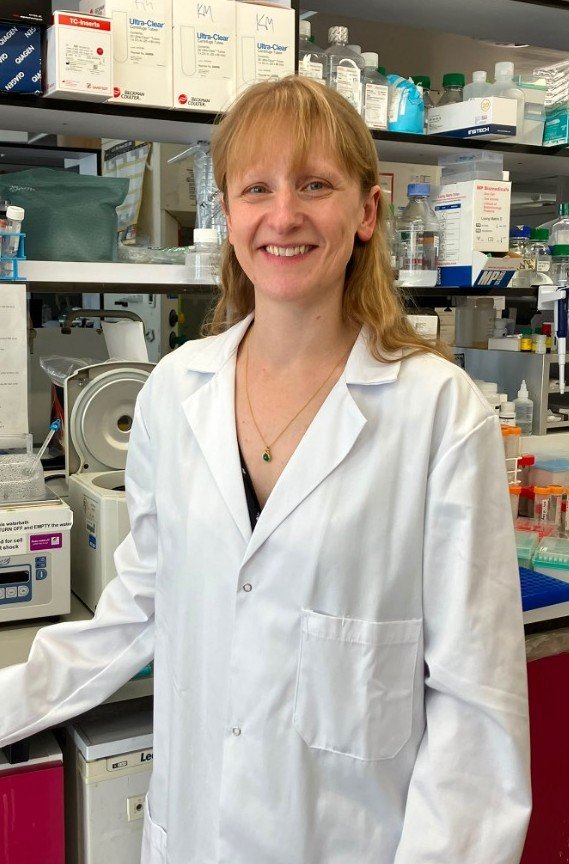
Dr Rosalin Cooper
Project information
- Lead researcher
Dr Rosalin Cooper, University of Oxford
- Research team
-
- Related conditions
-
- Root condition
- Research type
-
- Non-clinical
- Region
-
- South East
- Grant awarded
-
- Early Career Fellowship
- Status
- Ongoing
- Funding award date
- August 2026
- Amount awarded
£448,680
- Project completion date
- July 2030
The challenge
Our blood cells are made in the bone marrow. As we age, small changes naturally occur in the numbers and types of cells found there. In some people an age-related condition called CHIP develops, where blood cells carrying genetic changes linked to cancer begin to outgrow other cells. Having CHIP increases the risk of developing certain blood cancers such as myeloproliferative neoplasms (MPN), myelodysplastic syndrome (MDS) and acute myeloid leukaemia (AML). Despite this, very little is understood about why some people with CHIP go on to develop blood cancer while others don't.
The project
In this project, Dr Cooper and her team at the University of Oxford will use new technologies to develop specialised tools to create detailed "maps" of the bone marrow. These “maps” will show where different cells are, how many there are, and how they interact with one another. The team will then develop a picture of how the bone marrow changes naturally with age and compare these pictures in people with CHIP to people who don’t have the condition. They will study samples from over 600 people with CHIP who have been followed for many years, some of whom have gone on to develop blood cancer. By comparing the bone marrow of those who did and those who didn’t develop blood cancer, they hope to identify early warning signs that could indicate who is most at risk. Using these insights, they will develop AI-powered computer tools that can analyse routine bone marrow biopsies. These tools could detect subtle changes that are impossible to spot with the human eye. This could help to recognise CHIP and predict whether someone is likely to develop blood cancer.
The future
If successful, this research could transform how people with CHIP are monitored and cared for. An AI tool could give doctors a vital early warning, predicting who is most at risk of developing blood cancer and allow these people to be monitored and be treated if it develops. The knowledge gained could also help other researchers discover new ways to prevent blood cancers from developing in people with CHIP in the future.
Find out more
Our research
Thanks to our blood cancer community, we've invested over £500 million into research since 1960. Our discoveries have led to better and kinder treatments, and transformed lives.

Support for you
We’re here for anyone worried about or affected by blood cancer. Call our free blood cancer support line, email us or join our online community.

Blood cancer types
Understand all the different types of blood cancer and find information and support.

Clinical Trials Support Service
Find out how our Clinical Trials Support Service can help you.