
Reducing the need for chemotherapy in people with acute myeloid leukaemia (AML)
In this research project, Dr Richard Dillon will look for markers in DNA that will tell clinicians if someone with acute myeloid leukaemia (AML) is likely respond to a drug called venetoclax.
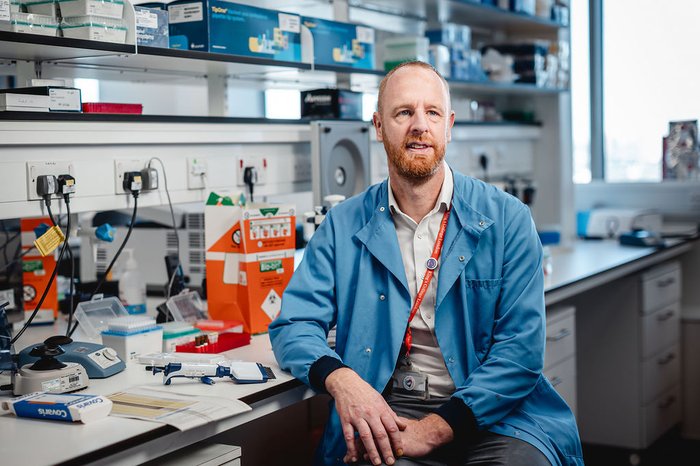
Dr Richard Dillon
Project information
- Lead researcher
Dr Richard Dillon, King's College London
- Research team
-
- A team at King's College London
- Related conditions
-
- Acute myeloid leukaemia (AML)
- Research type
-
- Non-clinical
- Region
-
- London
- Grant awarded
-
- Project Grant
- Status
- Completed
- Funding award date
- September 2021
- Amount awarded
£241,000
- Project completion date
- August 2024
The challenge
AML is an aggressive type of blood cancer with limited treatments options and a poor outlook. At the moment, chemotherapy is the only treatment that offers to hope of a cure, however this treatment can cause severe side effects. We urgently need to find new and kinder treatments for people with AML.
The project
VICTOR is a clinical trial taking place across the UK trying to understand whether we can spare people with AML from toxic chemotherapy and treat them with a drug called venetoclax instead. However, we don’t yet know which patients will respond to venetoclax and which patients require a more intense chemotherapy.
In this project, Dr Richard Dillon and his team will take samples from people who are taking part in the VICTOR trial, and will try their DNA to find markers that would indicate that their cancer would have a good or bad response to the drug venetoclax.
tba
- tba
The future
This project could help identify people with AML who could be treated and cured from their disease with venetoclax. This would mean they no longer require chemotherapy, sparing them from the associated side effects and improving their quality of life.
Find out more
Our research
Thanks to our blood cancer community, we've invested over £500 million into research since 1960. Our discoveries have led to better and kinder treatments, and transformed lives.

Support for you
We’re here for anyone worried about or affected by blood cancer. Call our free blood cancer support line, email us or join our online community.

Blood cancer types
Understand all the different types of blood cancer and find information and support.

Clinical Trials Support Service
Find out how our Clinical Trials Support Service can help you.