£

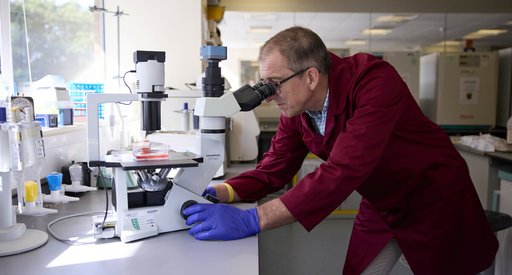
In this project, Professor Alan Warren and his team want to find new treatments for people with a disorder called Schwachman-Diamond syndrome.

Project information

Lead researcher

Professor Alan Warren, University of Cambridge

Research team
  • A team at University of Cambridge
Related conditions
  • Childhood leukaemias
Research type
  • Non-clinical
Region
  • East Anglia
Grant awarded
  • Programme Continuity Grant
Status
Completed
Funding award date
October 2021
Amount awarded

£300,000

Project completion date
September 2024

The challenge

We have many proteins inside our cells that act as housekeepers, making sure cells continue running smoothly. Proteins have to be built and if they’re not built correctly, processes inside cells can go wrong which can lead to cancer.

However, it currently isn’t known exactly how this construction goes wrong, making it difficult to design new treatments to stop this from happening. In this project, the team want to understand this more.

The project

Shwachman-Diamond syndrome (SDS) is a rare disorder that, among other things, can cause blood cancers such as myelodysplastic syndrome and acute myeloid leukaemia at a young age.

In this disorder, researchers have found out how protein construction goes wrong and now want to develop treatments to reverse this.

The team, who Blood Cancer UK have funded since 2003, will also use new, detailed techniques to study protein construction in the hope that this will reveal more about how it goes wrong and how we might be able to develop new treatments.

The future

The hope is that this research will lead to more personalised treatments for people with SDS that reduces their risk of developing blood cancer. They hope to advance a treatment to a phase 1 clinical trial in the next few years.

The team think that this research could lead to developments in blood cancer not only for people with SDS, but more generally across other types of blood cancer.

Help us beat blood cancer by funding a research project

  • £15 could help eight people newly diagnosed with blood cancer understand their condition.
  • £30 could help researchers study blood cancer cells to develop new treatments and improve early diagnosis.
  • £50 could help scientists identify genetic patterns in tumour samples to better understand how genes contribute to the development of blood cancer.
Donate