£

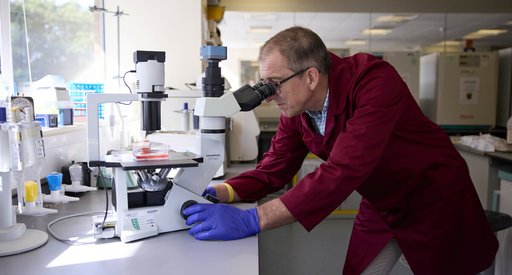
We desperately need new treatments for acute myeloid leukaemia (AML). Dr Karen Keeshan is studying whether existing drugs for solid tumours could be used to treat AML. This could quickly provide a new option for people living with the disease.

Project information

Lead researcher

Dr Karen Keeshan, University of Glasgow

Research team
Related conditions
  • Acute myeloid leukaemia (AML)
Research type
  • Non-clinical
Region
  • Scotland
Grant awarded
  • Project Grant
Status
Completed
Funding award date
June 2026
Amount awarded

£234,376.00

Project completion date
October 2019

The challenge

Acute myeloid leukaemia (AML) is a fast-growing form of blood cancer. However, the treatments available aren’t always able to control the disease. We desperately need to find new treatments for AML to improve people’s chances of survival.

The project

Dr Karen Keeshan has been studying a molecule called TRIB2. She has found that blocking TRIB2 or removing it from leukaemia cells makes chemotherapy drugs more effective at treating the disease.

While finding ways to stop TRIB2 working, Dr Keeshan has been studying drugs which block a family of proteins called the ERBB family. These drugs are currently used to treat solid tumours like lung cancer and breast cancer. She has discovered that these existing cancer drugs can kill AML cells, and that TRIB2 is destroyed during this process.

In this project, Dr Keeshan will study in more detail how these drugs work, and the role that TRIB2 has in this. She will test these drugs on AML cells grown in the lab and in mice. She hopes to find out more about why these drugs lead to the destruction of TRIB2, and whether these drugs could be repurposed to treat AML.

The future

Dr Keeshan’s work will reveal whether the ERBB-blocking drugs have potential as treatments for AML.

Because these drugs are already being used, they could benefit people with AML sooner than creating brand-new drugs.

She hopes that her work could rapidly lead to clinical trials of these drugs, which could give people with AML a better chance of survival.

Help us beat blood cancer by funding a research project

  • £15 could help eight people newly diagnosed with blood cancer understand their condition.
  • £30 could help researchers study blood cancer cells to develop new treatments and improve early diagnosis.
  • £50 could help scientists identify genetic patterns in tumour samples to better understand how genes contribute to the development of blood cancer.
Donate