
Targeting a protein to treat acute myeloid leukaemia (AML) in children
Childhood acute myeloid leukaemia (AML) is a type of blood cancer that is difficult to treat. Dr Keeshan is researching to see if removing or blocking a specific protein involved in the disease can help make it easier to treat.
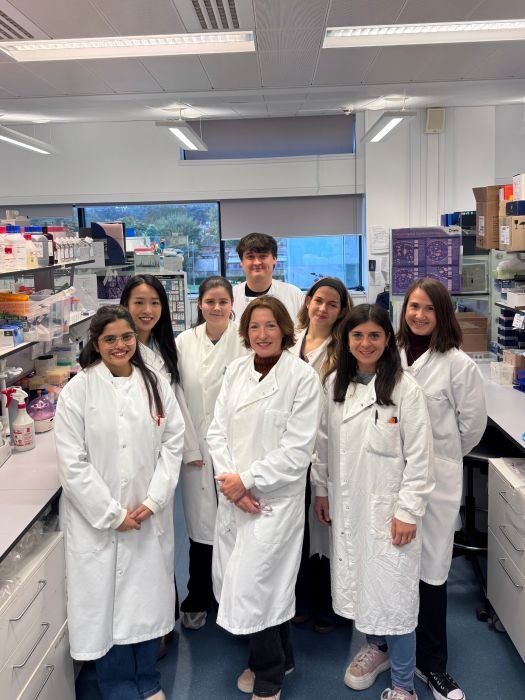
Dr Karen Keeshan and her team in the lab
Project information
- Lead researcher
Dr Karen Keeshan, University of Glasgow
- Research team
-
- A team at the University of Glasgow
- Related conditions
-
- Acute myeloid leukaemia (AML)
- Childhood acute myeloid leukaemia (AML)
- Childhood leukaemias
- Research type
-
- Non-clinical
- Region
-
- Scotland
- Grant awarded
-
- Project Grant
- Status
- Ongoing
- Funding award date
- April 2026
- Amount awarded
£298,093.95
The challenge
Childhood AML is a rare and aggressive type of blood cancer, with around 100 children and young adults diagnosed each year in the UK.
The disease can be very difficult to treat, and many children don’t respond well to current treatments. If treatments do work, they can cause horrible long-term side effects. Researchers have discovered a protein that is found on the surface of leukaemia cells in children with the disease.
This protein is more common in children whose AML is aggressive and those who have undergone chemotherapy that hasn’t worked. As this protein is not present on the surface of healthy blood stem cells (special cells that make blood cells), it could be an important target for new treatments with less harmful side effects.
The project
In this project, Dr Keeshan and her team at the University of Glasgow want to explore whether removing or blocking this protein can help make it easier to treat AML in children.
They plan to try three different ways to remove or block this protein by conducting experiments in the lab.
First, they will use a special technique to remove the protein from the leukaemia cells and test whether this improves how well chemotherapy works.
Secondly, they will try to break down the protein to see what happens, helping them to understand how a future drug might work.
Finally, they will test special antibodies (molecules that circulate in our blood) that will act like delivery vehicles, finding leukaemia cells with this protein on the surface and carrying a drug directly to them to kill the cancer cells.
The future
If successful, this research could lead to the development of new, safer and more effective treatments for children with AML, especially for those children whose cancer doesn’t respond well to current treatments.
The team hope this could provide a less harmful way to treat AML in children in the future, either on its own or in combination with other drug treatments.
Researchers also hope that the knowledge gained from this project could help to develop treatments that can be tested in clinical trials in the future.
Funding
This project is funded in partnership with CCLG: The Children & Young People's Cancer Association.

Find out more
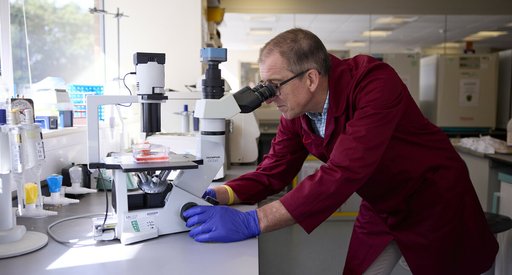
Our research
Thanks to our blood cancer community, we've invested over £500 million into research since 1960. Our discoveries have led to better and kinder treatments, and transformed lives.
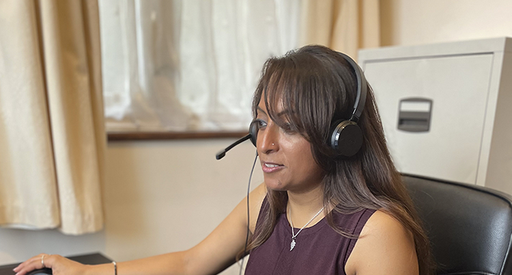
Support for you
Get free support from our specialist nurses, join our online community and access information you can trust.
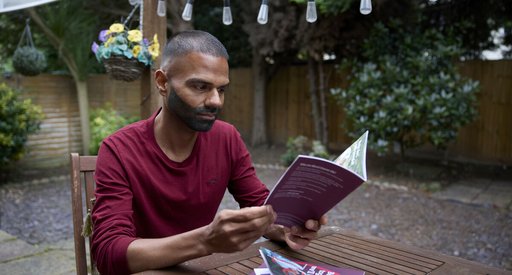
Blood cancer types
Understand all the different types of blood cancer and find information and support.
Clinical trials
Clinical trials are how new treatments are developed and improved. Find information and support at every stage of your journey.