
Trialling a personalised treatment approach for myeloma – The iFIT trial
Professor Gordon Cook and Dr Charlotte Pawlyn will trial a personalised treatment approach for people with myeloma based on how ‘fit’ verses ‘frail’ an individual is and how well their cancer responds to 6 months of standard drug treatments.
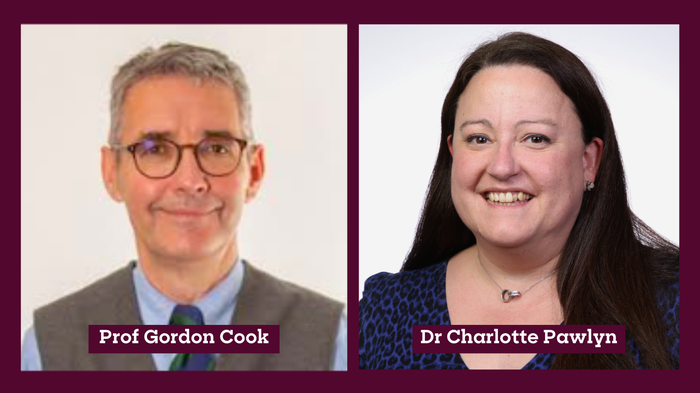
Professor Gordon Cook and Dr Charlotte Pawlyn
Project information
- Lead researcher
Professor Gordon Cook, University of Leeds Institute of Clinical Trials Research
- Research team
-
- Dr Charlotte Pawlyn, University of Leeds Institute of Clinical Trials Research
- Related conditions
-
- Myeloma
- Research type
-
- Clinical
- Region
-
- Yorkshire
- Grant awarded
-
- Clinical Trial
- Status
- Ongoing
- Funding award date
- August 2024
- Amount awarded
£590,773.15
The challenge
Myeloma is a type of blood cancer that affects blood cells in the bone marrow. Although myeloma can be treated, it currently has no cure. As individuals with myeloma are often treated with a stem cell transplant, many are too old or frail to receive this gruelling treatment, which has severe side-effects.
The team want to discover the best treatments that both improve survival and quality of life for newly diagnosed myeloma patients by:
- Personalising treatment for people with myeloma based on their level of frailty and how their cancer responds to treatment.
- Testing new immunotherapies for those with myeloma who are fitter but still have signs of cancer after six months, to see if these treatments are more effective.
- Reducing side effects for people with myeloma who are frailer, allowing them to stay on other treatments longer without worsening their cancer.
The project
We’re funding the iFIT trial in partnership with Cancer Research UK at the University of Leeds Institute of Clinical Trials Research, to discover the best treatments that both improve survival and quality of life for those newly diagnosed with myeloma.
This personalised approach will be based on how ‘fit’ or ‘frail’ an individual is and how well their cancer responds to 6 months of standard drug treatments.
For ‘fit’ individuals who still have signs of cancer after 6 months, the trial will see if treatments that harness the body’s own immune system, are more effective than standard drug treatments.
For frailer individuals who still have signs of cancer after 6 months, the team will test stopping a specific drug that is part of the standard drug treatments. Researchers hope that by stopping this specific drug, which often causes severe side effects, could mean individuals are able to continue having other drug treatments for a longer. If their cancer isn’t detectable after six months, the trial will explore if treatment can safely stop after two years instead of continuing longer.
Find out more
Our research
Thanks to our blood cancer community, we've invested over £500 million into research since 1960. Our discoveries have led to better and kinder treatments, and transformed lives.

Support for you
We’re here for anyone worried about or affected by blood cancer. Call our free blood cancer support line, email us or join our online community.

Blood cancer types
Understand all the different types of blood cancer and find information and support.

Clinical Trials Support Service
Find out how our Clinical Trials Support Service can help you.