
Understanding how CLL progresses
In this project, Dr Hoogeboom wants to know more about how CLL cells move around the body and start growing.
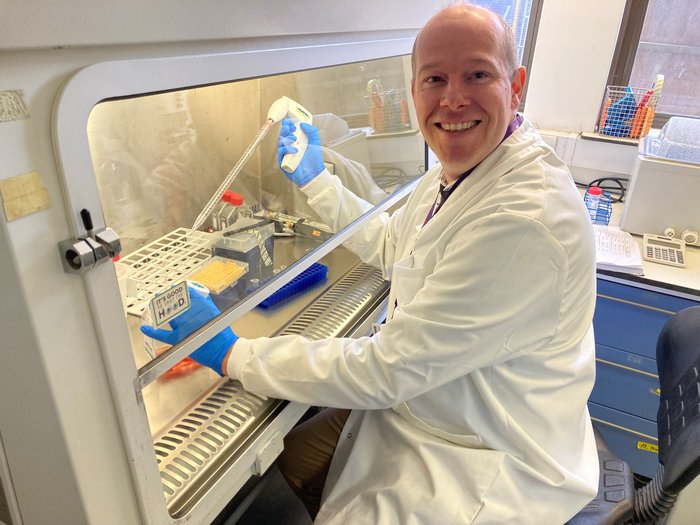
Dr Robbert Hoogeboom in the lab
Project information
- Lead researcher
Dr Robbert Hoogeboom, King's College London
- Research team
-
- A team at King's College London
- Related conditions
-
- Chronic lymphocytic leukaemia (CLL)
- Research type
-
- Non-clinical
- Region
-
- London
- Grant awarded
-
- Project Grant
- Status
- Completed
- Funding award date
- May 2022
- Amount awarded
£249,000
- Project completion date
- April 2025
The challenge
Chronic lymphocytic leukaemia (CLL) is a type of blood cancer that currently cannot be cured. The disease can be controlled using treatments such as ibrutinib but even after being on this treatment for years, CLL cells still exist in the blood and can eventually stop responding to treatment.
The project
CLL cells are constantly travelling around our bodies in our blood. When they’re in our blood they’re not growing in numbers, but when they move into certain organs they can divide and grow rapidly, which makes the disease worse.
Dr Hoogeboom and his team want to understand what CLL cells do when they get into these organs and how CLL cells move into these organs in the first place, to see if they can stop this from happening.
The future
The hope is that by understanding more about what CLL cells look like when they are growing in numbers, researchers may be able to identify ways to target the cells which could pave the way to developing new treatment for CLL.
This area of research could provide more answers about cells that drive disease progression and may be resistant to treatment.
- - Patient Voice Grant Advisory Network Member, living with non-Hodgkin lymphoma
Find out more
Our research
Thanks to our blood cancer community, we've invested over £500 million into research since 1960. Our discoveries have led to better and kinder treatments, and transformed lives.

Support for you
We’re here for anyone worried about or affected by blood cancer. Call our free blood cancer support line, email us or join our online community.

Blood cancer types
Understand all the different types of blood cancer and find information and support.

Clinical Trials Support Service
Find out how our Clinical Trials Support Service can help you.