
Understanding how leukaemia stem cells may help develop new treatments for AML
Despite progress in recent years with the development of new treatments for people with acute myeloid leukaemia (AML), many people still see their cancer return.
Dr Nisha Narayan wants to explore a new technique which uses leukaemia stem cells to predict how individuals might respond to existing treatments.

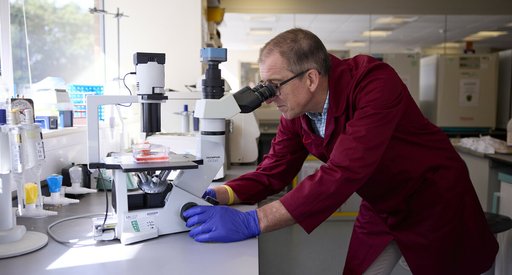
Dr Nisha Narayan, University of Cambridge
Project information
- Lead researcher
Dr Nisha Narayan, University of Cambridge
- Research team
-
- A team at University of Cambridge
- Related conditions
-
- Acute myeloid leukaemia (AML)
- Research type
-
- Non-clinical
- Region
-
- East Anglia
- Grant awarded
-
- Early Career Fellowship
- Status
- Ongoing
- Funding award date
- October 2025
- Amount awarded
£349,596.91
The challenge
AML is an aggressive form of blood cancer which can be very difficult to treat. Around 3,000 people are diagnosed with AML every year in the UK.
In recent years researchers have made great progress in understanding what causes AML. This has resulted in new treatments and better outcomes for some people with the disease.
Unfortunately, many people with AML still see their cancer return. This is because of a small a group of cancerous cells called leukaemic stem cells (LSC). LSC are rare but more resistant cancer cells that can lie inactive.
Many treatments for AML work by seeking out and destroying the cancer cells, however LSC can remain undetected and survive. Eventually, they can ‘wake up’ and begin to divide and multiply, so people see their cancer come back.
There is a need to understand how these LSC remain undetected and resist treatment so we can find new ways to target and eliminate them for good.
The project
In this project, Dr Nisha Narayan wants to build on research that has looked at LSC in people with AML.
It is thought that people with AML may have more than one type of LSC and that they may not respond to treatment in the same way. Although some treatments may seek out and destroy some LSC, others are able to survive and eventually the cancer can come back.
Dr Narayan wants to understand this better using a new scientific technique called cellular barcoding. This works by giving each cell a unique ‘label’, allowing researchers to track the behaviour of individual cells to see how they act over time.
Dr Narayan wants to use this new technique to identify the different types of LSC present in people with AML and see exactly which ones are more likely to survive treatment and cause the cancer to come back.
The future
It is hoped this project will deepen our understanding of the different types of LSC in AML and how likely is for the cancer to come back.
By identifying the different types of LSC and their behaviours the researchers plan to predict how individuals might respond to existing treatments. They hope to be able to use this information to help develop more personalised and effective therapies in the future for people with AML.
Ultimately, this knowledge could lead to the development of new treatments that specifically target the LSC. As LSC are present in many types of blood cancer, this research could help in new treatments across the wider blood cancer community.
Find out more
Our research
Thanks to our blood cancer community, we've invested over £500 million into research since 1960. Our discoveries have led to better and kinder treatments, and transformed lives.

Support for you
Get free support from our specialist nurses, join our online community and access information you can trust.

Blood cancer types
Understand all the different types of blood cancer and find information and support.

Clinical trials
Clinical trials are how new treatments are developed and improved. Find information and support at every stage of your journey.