
Understanding how umbilical cord stem cells could make transplants more accessible for people with blood cancer
Stem cell transplants can cure some of the hardest to treat blood cancers, but the supply of suitable stem cells is limited. Dr Masoumi wants to better understand how stem cells work and find new ways to grow them from umbilical cord blood so they can be made more accessible for people who need them.
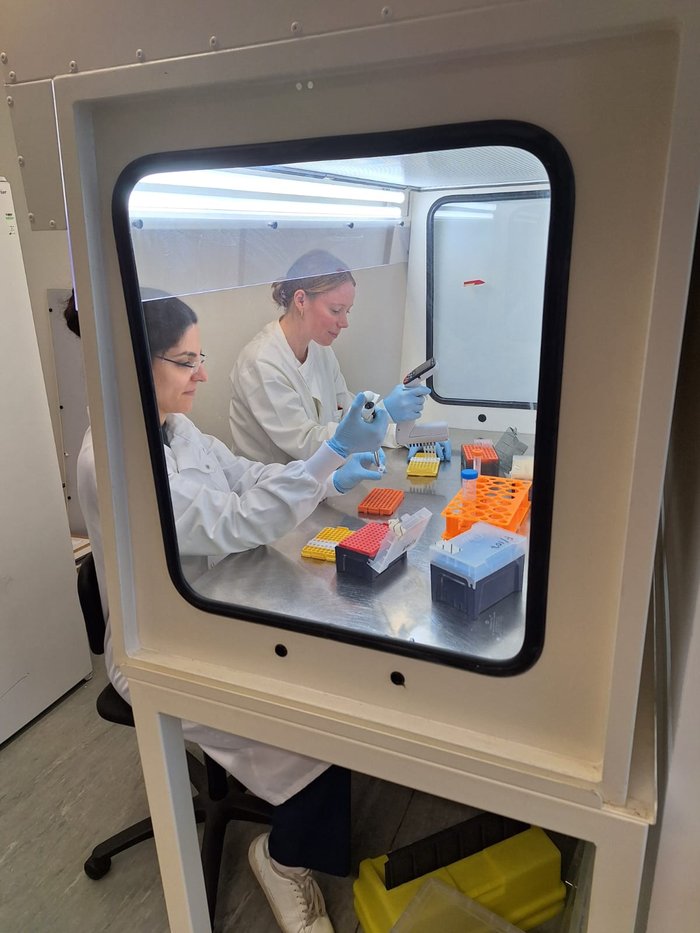
Dr Zahra Masoumi and her colleague working in the lab
Project information
- Lead researcher
Dr Zahra Masoumi, University of York
- Research team
-
- Related conditions
-
- Research type
-
- Non-clinical
- Region
-
- Yorkshire
- Grant awarded
-
- Innovative Pilot Grant
- Status
- Ongoing
- Funding award date
- April 2026
- Amount awarded
£29,999
- Project completion date
- March 2027
The challenge
Stem cell transplants are currently the only cure for some of the hardest to treat blood cancers, including acute myeloid leukaemia (AML). Stem cells (special cells that produce all other types of blood cells), can come from bone marrow, blood or umbilical cord blood. Umbilical cord blood is easy to collect and widely available. Early evidence also suggests that it may reduce the risk that someone’s blood cancer will come back compared to a transplant form bone marrow. Unfortunately, each umbilical cord contains only a small number of stem cells. This can slow down recovery after a transplant and may not provide enough cells for some people. Finding ways to grow these stem cells outside the body is an important challenge that could make life-saving transplants available to more people.
The project
In this project, Dr Masoumi will study the proteins inside stem cells taken from umbilical cord blood. Proteins control how cells grow, repair themselves and produce blood. By studying these proteins, the team hope to gain a deeper understanding of how stem cells work. They will then grow these cells in the lab to see how well they develop over time and use this knowledge to identify which umbilical cord blood samples are most likely to work well in people with blood cancer. The goal is to find new ways to grow larger numbers of umbilical cord blood stem cells outside the body, making them stronger and more effective for transplant.
The future
If successful, this research could lead to new and better ways of growing umbilical cord blood stem cells outside the body, making transplants safer and faster. In the longer term, this could make stem cell transplants more accessible and more effective for people with the hardest to treat blood cancers.
Find out more
Our research
Thanks to our blood cancer community, we've invested over £500 million into research since 1960. Our discoveries have led to better and kinder treatments, and transformed lives.

Support for you
We’re here for anyone worried about or affected by blood cancer. Call our free blood cancer support line, email us or join our online community.
Blood cancer types
Understand all the different types of blood cancer and find information and support.

Clinical Trials Support Service
Find out how our Clinical Trials Support Service can help you.