£

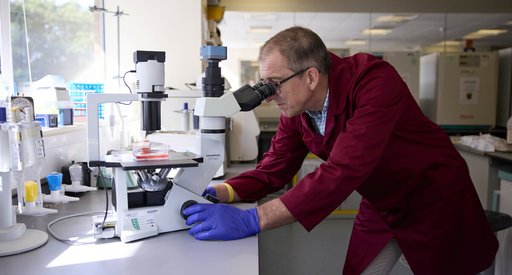
We need to find new ways to treat diffuse large B-cell lymphoma (DLBCL). Professor Ming-Qing Du is studying changes in the DNA of an aggressive type of DLBCL. This could lead to new treatments to give people living with the disease a better chance of survival.

Project information

Lead researcher

Professor Ming-Qing Du, University of Cambridge

Research team
  • A team at University of Cambridge
Related conditions
  • Diffuse large B-cell lymphoma (DLBCL)
Research type
  • Non-clinical
Region
  • East Anglia
Grant awarded
  • Project Grant
Status
Ongoing
Funding award date
March 2025
Amount awarded

£298,684.36

The challenge

Diffuse large B-cell lymphoma (DLBCL) is the most common type of blood cancer in adults, with over 3,000 new cases diagnosed in the UK every year.

Sadly, the standard treatments aren’t always able to cure the disease. We need to find new ways to treat people with DLBCL and give them the best possible chance of survival.

The project

In previous research, Professor Ming-Qing Du and his colleagues have identified a subtype of DLBCL which is particularly aggressive. He now wants to learn more about the biology of this high-risk form of the disease, which could lead to new treatments to control it.

In this project, Professor Du will study samples donated by hundreds of people with DLBCL.

In these samples, he will look for a series of specific changes in the DNA. These changes could explain why some types of DLBCL are more aggressive than others.

In doing so, he will be able to link certain patterns of DNA changes to an increased risk of relapse or treatment resistance.

The future

Professor Du’s research will reveal why certain cases of DLBCL are more resistant to treatment than others. This will help him and other researchers to develop tools to predict the outlook for people with DLBCL. It could also identify avenues for new treatments for aggressive subtypes of this lymphoma.

In the long term, Professor Du’s research will improve treatment for DLBCL, and so improve the chances of survival for people living with the disease.

Help us beat blood cancer by funding a research project

  • £15 could help eight people newly diagnosed with blood cancer understand their condition.
  • £30 could help researchers study blood cancer cells to develop new treatments and improve early diagnosis.
  • £50 could help scientists identify genetic patterns in tumour samples to better understand how genes contribute to the development of blood cancer.
Donate