
Understanding the role of genes in how ALL develops in children
After a bone marrow transplant, donor’s immune cells attack cancer cells in the patient’s body called the graft-verses-leukaemia (GVL) effect. However, this treatment also has a risky side effect called graft-versus-host disease (GVHD). In both GVL and GVHD the immune system reacts in similar ways and Dr Callum Wright and his team want to understand more about this.
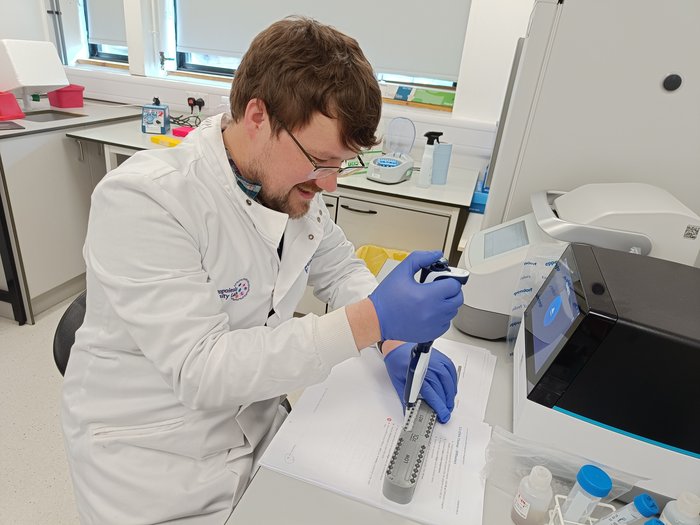
Dr Callum Wright in the lab
Project information
- Lead researcher
Dr Callum Wright, Newcastle University
- Research team
-
- A team at Newcastle University
- Related conditions
-
- Root condition
- Research type
-
- Non-clinical
- Region
-
- North East
- Grant awarded
-
- Innovative Pilot Grant
- Status
- Ongoing
- Funding award date
- January 2025
- Amount awarded
£28,942
The challenge
Bone marrow transplants can be a way to cure some types of blood cancers. This is where healthy cells from a donor’s bone marrow (the spongy material inside some of our bones) replace a patient’s damaged unhealthy cells.
This causes an incredible ‘cancer killing process’ where the donor's immune cells recognise and attack any remaining cancer cells in the body called the graft-verses-leukaemia (GVL) effect.
Unfortunately, bone marrow transplants have a risky side effect called graft-versus-host disease (GVHD). This causes a ‘body attacking process’ where the donor’s immune cells (the "graft") mistakenly attack the patient’s body (the "host"), which can lead to serious and even life-threatening complications.
The project
In both GVL and GVHD the immune system reacts in similar ways and are caused by a particular type of white blood cell called T-cells. In this project, Dr Wright and his team want to investigate this further.
They plan to examine the differences between T-cells causing the “cancer killing process” (GVL) and those causing the “body attacking process“ (GVHD). They will use exciting new technology that will allow them to look at these immune cells in detail to compare bone marrow samples.
By understanding these differences researchers can use this information to help improve survival by improving the cancer killing process and reducing the body attacking process.
The future
It's hoped that this project could lead to further research and the development of drugs or treatments that will give those who have received a bone marrow transplant the best possible chance of survival.
This research will also help increase our understanding of the way that the immune system attacks cancer cells and so could help us understand why cancer treatments work well for some people and not for others. This could lead to new insights into ways we could treat a wide range of blood cancers more effectively.
Find out more
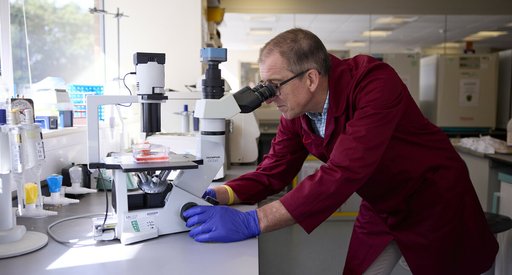
Our research
Thanks to our blood cancer community, we've invested over £500 million into research since 1960. Our discoveries have led to better and kinder treatments, and transformed lives.

Support for you
We’re here for anyone worried about or affected by blood cancer. Call our free blood cancer support line, email us or join our online community.
Blood cancer types
Understand all the different types of blood cancer and find information and support.

Clinical Trials Support Service
Find out how our Clinical Trials Support Service can help you.