
Understanding the role of the bone marrow environment in Myelodysplastic syndromes (MDS)
Myelodysplastic syndromes (MDS) are a group of blood cancers that start in the bone marrow and are difficult to treat. Dr Mian wants to understand how the cells surrounding cancer cells in the bone marrow help the disease to develop and grow so he can find new ways to treat it.
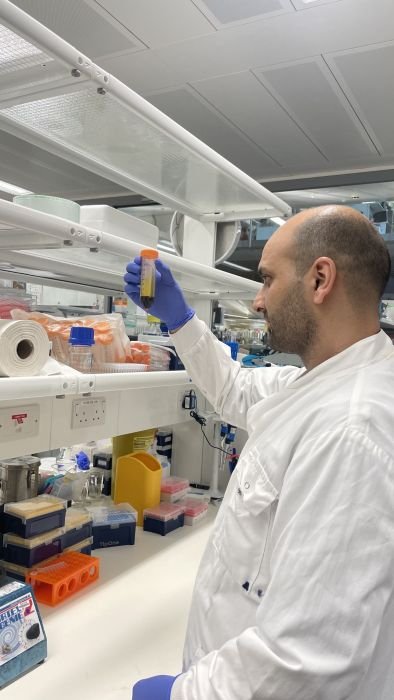
Dr Syed Mian
Project information
- Lead researcher
Dr Syed Mian, Queen Mary University London
- Research team
-
- Related conditions
-
- Myelodysplastic syndromes (MDS)
- Research type
-
- Non-clinical
- Region
-
- London
- Grant awarded
-
- Early Career Fellowship
- Status
- Ongoing
- Funding award date
- October 2026
- Amount awarded
£449,780
- Project completion date
- June 2026
The challenge
MDS are a group of blood cancers that start in the bone marrow (the spongy tissue inside our bones where blood cells are made). In MDS, the stem cells that normally produce blood cells do not work properly, meaning the body cannot produce enough healthy blood cells. For a long time, scientists believed MDS was caused only by faulty stem cells. However, new research suggests that the surrounding cells in the bone marrow may also play an important role in helping the cancer grow and survive. Understanding how this happens could help researchers to develop new treatments that target not just the cancer cells but the environment that supports them.
The project
In this project, Dr Mian and his team will study which cells turn cancerous in MDS and what other types of cells might be supporting these. Using bone marrow samples from people with MDS and healthy individuals they will study how these cells behave and communicate with each other, and how cancer cells can reprogramme healthy cells. They will then look for key proteins and signals in the bone marrow that support the growth of cancerous cells. They want to see if they can find a way to stop the cancer cells from growing and multiplying while allowing healthy blood cells to recover.
The future
If successful, this research could lead to new treatments for MDS that work alongside existing therapies, targeting not just the cancer cells but the bone marrow environment that helps them survive. They hope this will lead to a better understanding of how the bone marrow supports MDS and that this could also benefit people with other blood cancers in the future where similar processes may be at play.
Find out more
Our research
Thanks to our blood cancer community, we've invested over £500 million into research since 1960. Our discoveries have led to better and kinder treatments, and transformed lives.

Support for you
We’re here for anyone worried about or affected by blood cancer. Call our free blood cancer support line, email us or join our online community.

Blood cancer types
Understand all the different types of blood cancer and find information and support.

Clinical Trials Support Service
Find out how our Clinical Trials Support Service can help you.