
Understanding why mantle cell lymphoma comes back after treatment
Mantle cell lymphoma is a rare type of blood cancer. Treatment can usually get rid of mantle cell lymphoma but it is likely to return. Dr Oscar Atkins wants to understand why this happens to identify ways to stop the disease from returning.
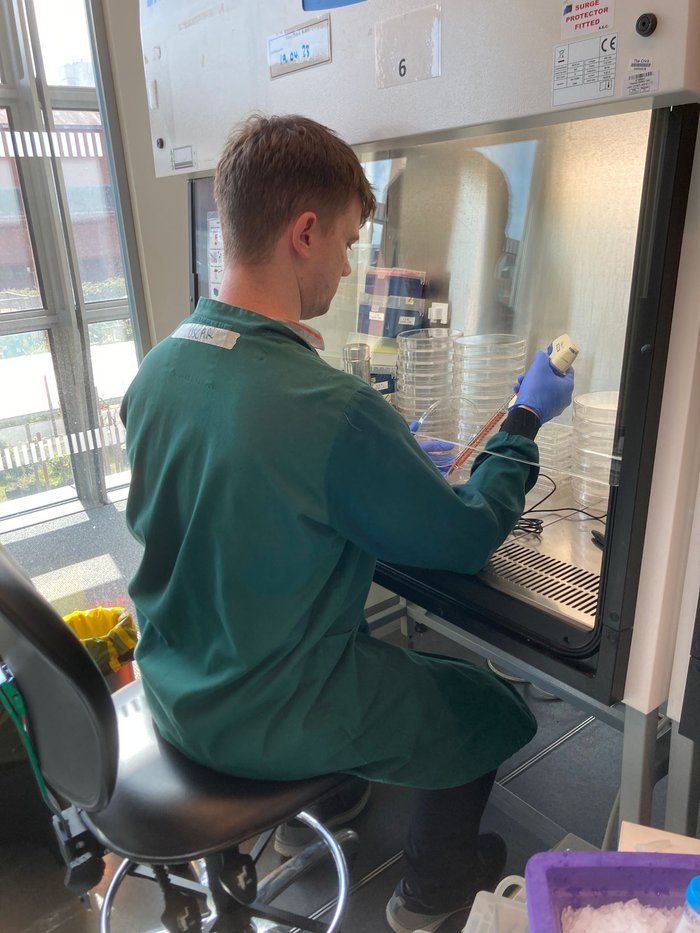
Dr Oscar Atkins
Project information
- Lead researcher
Dr Oscar Atkins, Francis Crick Institute
- Research team
-
- Related conditions
-
- Lymphoma
- Research type
-
- Non-clinical
- Region
-
- London
- Grant awarded
-
- Innovative Pilot Grant
- Status
- Ongoing
- Funding award date
- April 2026
- Amount awarded
£29,961
- Project completion date
- March 2027
The challenge
Mantle cell lymphoma is a rare type of blood cancer that affects white blood cells called B cells, which normally help the body fight infection. Treatment can usually get rid of mantle cell lymphoma but the disease is likely to return. Researchers believe this happens because a small number of cancer cells survive treatment, hide in the body and then begin to divide and multiply again. To understand why this happens, scientists need better models for lab experiments that more closely match what happens in people with mantle cell lymphoma.
The project
In this project, Dr Atkins and his team will create new models of the disease in the lab that carry the same gene changes seen in people with mantle cell lymphoma. They will then treat these models with medicines similar to those used for patients and carefully study any cancer cells that survive despite treatment. By looking at where these cells are, how they behave, and what makes them different from the cells that were destroyed, the team hope to understand what allows them to escape treatment.
The future
If successful, this research could help to identify new ways to target the cancer cells that survive treatment and prevent the disease from coming back.
Find out more
Our research
Thanks to our blood cancer community, we've invested over £500 million into research since 1960. Our discoveries have led to better and kinder treatments, and transformed lives.

Support for you
We’re here for anyone worried about or affected by blood cancer. Call our free blood cancer support line, email us or join our online community.

Blood cancer types
Understand all the different types of blood cancer and find information and support.

Clinical Trials Support Service
Find out how our Clinical Trials Support Service can help you.