The GP told me I had a cold. A few days later, I was diagnosed with acute promyelocytic leukaemia (APL)
In 2025, Marie went to the GP and was told that she just had a cold. A few days later, she was diagnosed with acute promyelocytic leukaemia (APL), a fast-growing type of blood cancer. After intensive treatment, Marie is now in remission. Here, she talks about the impact her diagnosis has had on her emotionally and physically, and how the support from her partner, family and hospital team has helped her every step of the way.
How it started
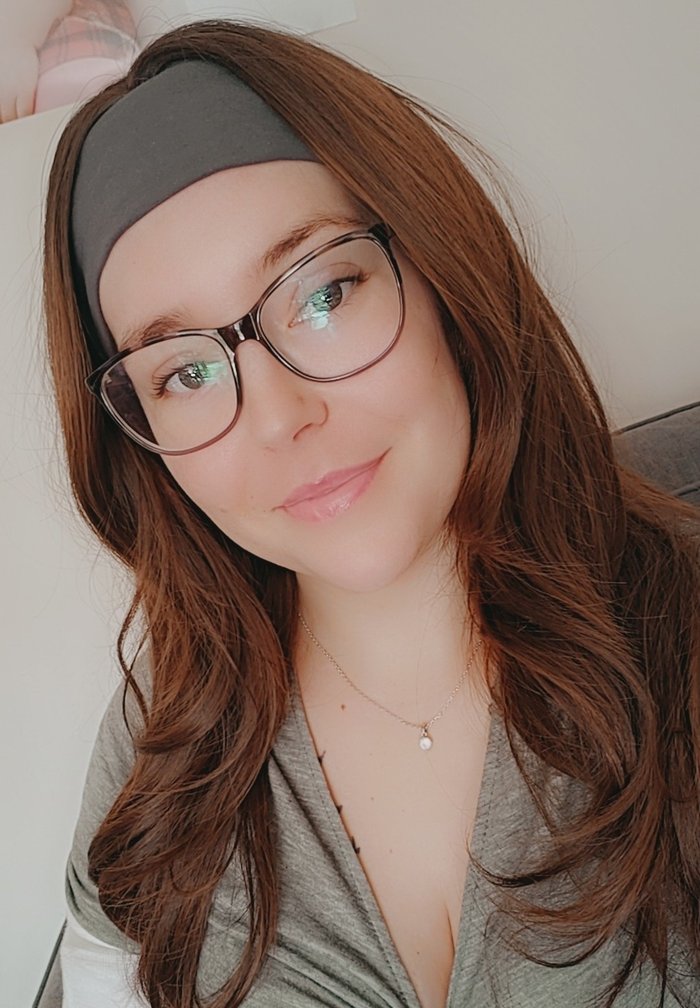
The first thing I noticed before I was diagnosed was the bruises on my legs. As a busy mum of two, I brushed it off and put it down to the fact that my son, who was two years old at the time, often liked to jump on me. I then started getting nosebleeds that would take a while to stop and noticed that I was also feeling breathless. I remember my partner mentioning a bus stop billboard he’d seen about symptoms of leukaemia, but I didn’t think anything of it. Soon after, I noticed a bad sore on my lips. I decided to go to the GP and told them about the symptoms I was experiencing. I was told that I had a cold sore, that was a result of a cold, and that I’d be fine. So, I went home, but by the Friday I felt seriously unwell. I was weak and shivering and I had a temperature of 42 °C. Over the weekend, the only way I can describe it, is that it felt like I was dying.
My partner encouraged me to go to A&E, and it’s so lucky that I did, as it was a medical emergency. Straight away, I was told I had sepsis. I needed a bone marrow biopsy to investigate further. I was later told that I had acute promyelocytic leukaemia (APL), a fast-growing type of leukaemia that affects promyelocytes, which are white blood cells in the early stages of their development.
I’d heard of leukaemia before, but I’d never heard of APL. I remember my mum and my partner were devastated, but I was in total shock.
All I could think was, “What am I going to do about the kids?” They were my first thought. Then, straight away, I thought, “Am I going to die? Can I pass it down to my kids?” The rest is a total blur.
After my diagnosis, my condition unfortunately went downhill. I had to be put into an induced coma for a week. Because I also had sepsis, my hospital team were concerned that the treatment was making me worse and had to decide whether to stop or continue my treatment. Fortunately, they made the decision to continue it, and gradually, my condition began to improve. I remember waking up a week later with all of these wires attached to me.
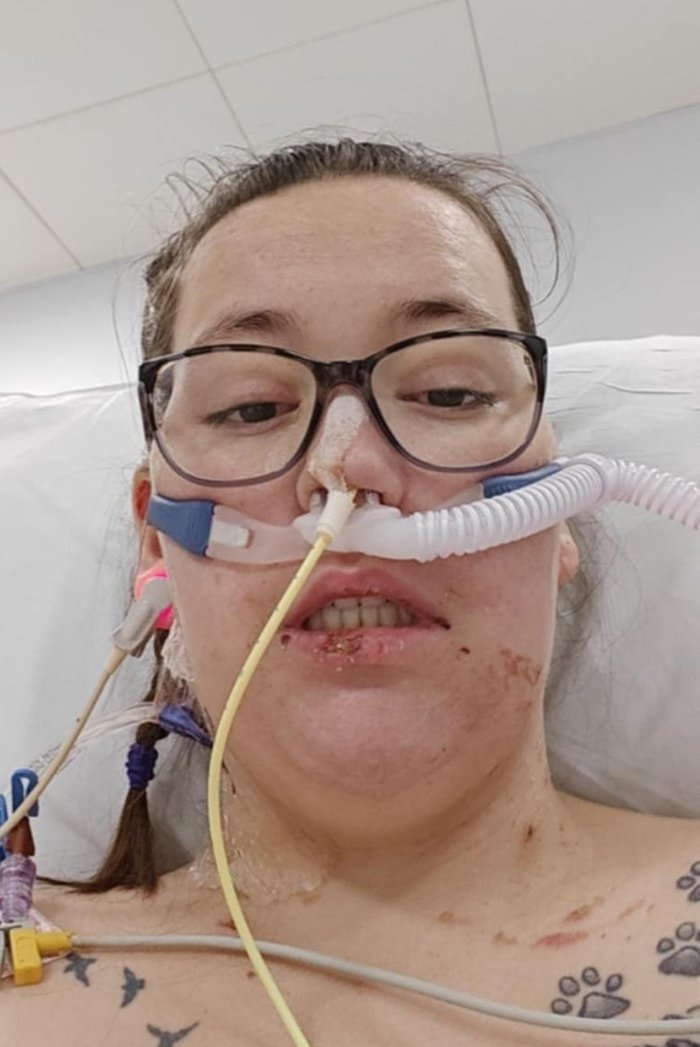
Marie in hospital, after her diagnosis
My treatment
I ended up staying in hospital for 10 weeks. I was the youngest person on the cancer ward. I felt quite overwhelmed, because I’d only ever been in hospital before to have my children. Visits from my family really helped me during this time. My partner, sister and mum would visit every day. It gave me a bit of routine which really helped. I also had incredible support from my hospital team and support staff while I was in there. I really got to know them because I saw them so often. Some of them would come and sit with me just to chat, and I really appreciated having them to talk to. They supported my partner and family too, talking them through everything. When I was eventually discharged, I got quite tearful because I just didn’t know what I was going to do without their care and support.
It was tough, but being away from my children was the hardest part. I didn’t see my two-year-old son for seven weeks. When I first saw my six-year-old daughter, she was worried about coming near me because she thought I might make her sick.
I’m a stay-at-home mum, so I have always been with my children all the time. We’re together every single day, so suddenly being away from them for such a long time was incredibly strange. It was a huge change for all of us, and I think it was difficult for them to understand what was happening too.
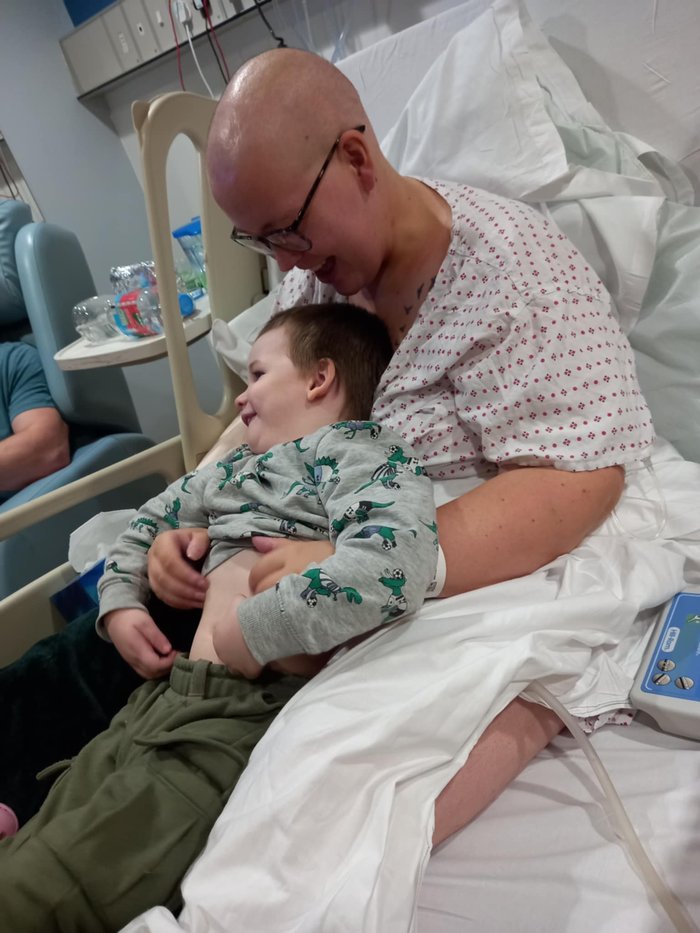
Marie, seeing her son again after seven weeks apart.
My recovery
Because I needed to stay in hospital for so long, by the time I was discharged, I had lost the ability to walk. I used a wheelchair and crutches and needed physiotherapy to help me learn to walk again. My house was adapted to help with my recovery – everything I needed was moved downstairs, and my sofa was replaced with a hospital bed. The impact on my mobility has been particularly difficult. I’ve found it hard not being able to pick the kids up and do all the things I want to do with them.
Over the following months, I continued travelling back and forth to hospital for my intensive treatment, at first as many as four or five days a week. On top of my mobility issues, I was struggling with the frequent headaches, infections and extreme tiredness that the treatment was causing. I’d come home from hospital and need to go straight to sleep, which was hard because my kids wanted to spend time with me and found it hard to understand why I couldn’t.
Looking back, I feel like I lost my identity for a time. I wasn’t able to see my children or be there for them in the way we were used to, I lost my mobility, and I lost my hair.
Thankfully, I’ve now finished treatment and I’m in remission. During this first year, I’ll see an oncologist every three months and have a blood test so they can keep a close eye on me and how I’m doing.
I’m going from strength to strength, but the experience still massively affects me. I’ve felt lucky to have so much support from my partner and our families over the past year. My partner, who ended up taking a year off work while I had treatment and has only just gone back, is taking part in Walk the World, where he'll walk every day this October to fundraise for Blood Cancer UK. We want to raise awareness of blood cancer and help raise money for research into lifesaving treatments, for others facing the same frightening, uncertain journey that we did.
Fortunately, the outlook for APL is good. There was a time during my treatment when I didn’t think I would make it through, but now, just a year on, I’m looking forward to getting married at the end of October. It’s been an incredibly difficult year, but I’m so grateful to be here.
To anyone worried about symptoms, please don't leave it. If something doesn’t feel right, go and get checked out.