
Gertrude Elion: How one woman’s determination transformed cancer treatment
Gertrude “Trudy” Elion was an American biochemist and pharmacologist who discovered the first successful treatment for childhood leukaemia, a type of blood cancer. This is the story of how she overcame financial hardship and sexism to earn a Nobel Prize.
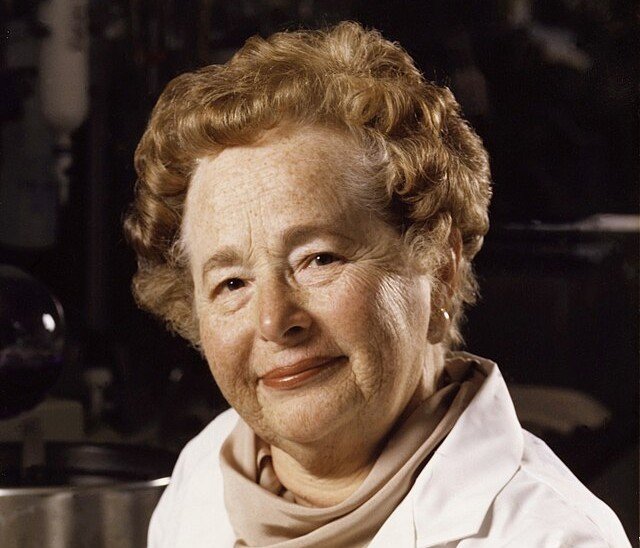
Gertude Elion in 1983 (Photo from Wikimedia Commons)
Learning from loss
Born in New York in 1918 to Jewish immigrants from Eastern Europe, Elion came from humble beginnings. Her father was a dentist and her mother ran the household.
Elion had a very close and loving relationship with her grandfather, but at 15 years old she was devasted by his painful death from stomach cancer. It was then she vowed to pursue a career to help combat the deadly disease.
I was highly motivated to do something that might eventually lead to a cure for this terrible disease.
Elion had a thirst for knowledge and loved reading about the people behind new discoveries – she idolised world-renowned scientists Marie Curie and Louie Pasteur.
Having lost their savings in the 1929 stock market crash, Elion's family couldn't afford to send her to college. Despite her father wishing her to follow him into dentistry, his daughter had a passion for science and studied chemistry at a free college where she graduated top of her class in 1937.
A woman in a man’s world
Looking for a job within the male-dominated chemistry field was tough. Elion was told by one prospective employer she'd be a “distracting influence” on her male colleagues.
In my day I was told women didn’t go into chemistry. I saw no reason why we couldn’t.
In the shadow of the Great Depression, she juggled temporary jobs, before completing her masters degree in 1941. World War II finally provided her with an opportunity.
With thousands of men enlisted to the war, women were called upon to join the workforce, and in 1944 Elion joined a research laboratory after a chance interview with Dr George Hitchings.
Hitchings was studying DNA by using chemicals to stop unhealthy cancer cells in their tracks – creating more targeted treatments.
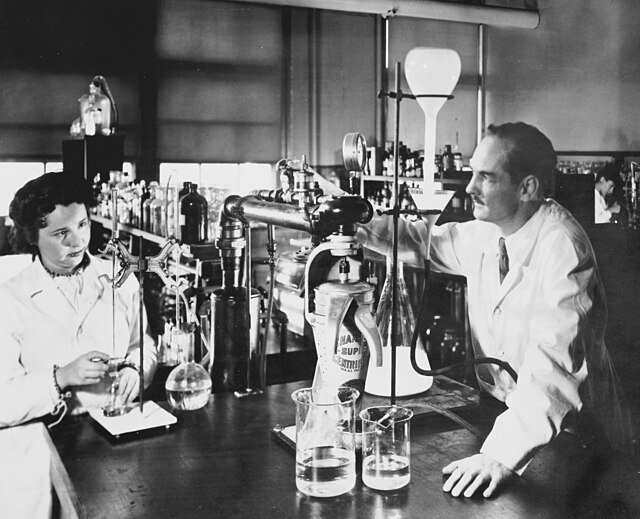
Nobel Prize winners, Dr Hitchings and Dr Elion in 1948 (Photo from Wikimedia Commons)
Taking a chance on a career
For two years, Elion split her time between the lab with Hitchings and studying for her PhD doctorate, until she was forced to make a choice between the two.
Seeing her potential, Dr Hitchings insisted she could excel in her work – even without a doctorate. With his encouragement, she took the chance and put aside her PhD.
The amount of work that I put into it was greater than the amount I might have put into my studies in school. There was nothing to distract me. I could work in the lab as long as I wanted. I always took work home. It was my life, it wasn’t just my job.
Together Elion and Hitchings set off on the unbeaten track of “rational” and targeted drug method – away from the classic “trial and error” method of treatment.
Following in her idols' footsteps with her own discovery
In 1950, Elion created 6-mercaptopurine (6MP) a drug that would change the course of cancer treatment forever.
It was the first successful drug effective against leukaemia. It was particularly successful in treating childhood leukaemia, which until then had a very poor prognosis. This was the first step towards making childhood leukaemia a treatable disease.
Today mercaptopurine is a type of chemotherapy used to treat acute lymphoblastic leukaemia (ALL) and acute promyelocytic leukaemia (APL) and is responsible for the greatly increased survival rates we see today in childhood blood cancer.
“You have to have the patience. That’s what I always tried to instil in the people in my lab, that they shouldn’t be too discouraged if something didn’t work, that it wasn’t the end of the line.
This incredible drug breakthrough was the first of many in her long career collaborating with Dr Hitchings.
A lifetime of achievement
In 1988, Elion shared a Nobel Prize in Physiology or Medicine with fellow pharmacologists Dr George Hitchings and Sir James W.Black "for their discoveries of important principles for drug treatment”.
Elion died aged 81 in 1999 after a lifetime of dedication to ease human suffering. To this day, the result of her grit and determination continues to save countless lives.
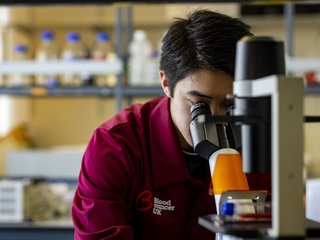
Our research into childhood leukaemia
Childhood leukaemia has always been a focus for our research and is where we have some of our biggest breakthroughs.