
Early Career Fellowships
A call to early career blood cancer researchers who have already obtained a PhD to advance their career as a researcher.
Introduction
An Early Career Advancement Fellowship is designed to enable the most talented early career blood cancer researchers who have already obtained a PhD and undertaken further research as a postdoc or equivalent, to transition towards independence as a researcher.
We want to continue to support the development of the most gifted early career researchers, so they can go on to become the next generation of blood cancer research leaders.
Key dates
The next Early Career Fellowships scheme will open in Spring 2026. The launch of the round together with the relevant guidance information will be detailed on this page.
Grant amount
Grants will typically be awarded for up to three years' full time or five years' part time for a maximum of £450,000.
We're aiming to fund four fellowships from our core budget for this round. In addition, we're pleased to announce our prestigious new Langmuir Fellowship, which will be specifically focused on myeloma. This has been made possible thanks to a generous gift from the Langmuir Family Foundation and will be awarded to the highest ranked applicant in the field of myeloma.
Get in touch
If you have any queries regarding Early Career Fellowships, please contact [email protected].
The scheme's impact
Our Early Career Fellowships were relaunched in 2024-2025. The first awards were made in March 2025.
-
4 Awards made
-
£1,352,027 Total invested
-
29% Applicant success rate
Our research
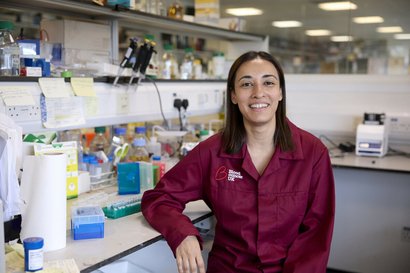
Our £500 million investment in research since 1960 has helped transform treatments and taken us to the point where beating blood cancer is now in sight. Our researchers are working to finish the job.
More About ThisPreviously awarded Early Career Advancement Fellowships
- Using special cells in the bone marrow to help improve treatment of AML
- Understanding how leukaemia stem cells may help develop new treatments for AML
- Preventing and treating infections in patients with blood cancer following CAR-T cell therapy
- Unlocking new hope: developing new, effective treatments for people with myeloma and AML