Being diagnosed with ALL was a huge shock, but my family and faith got me through
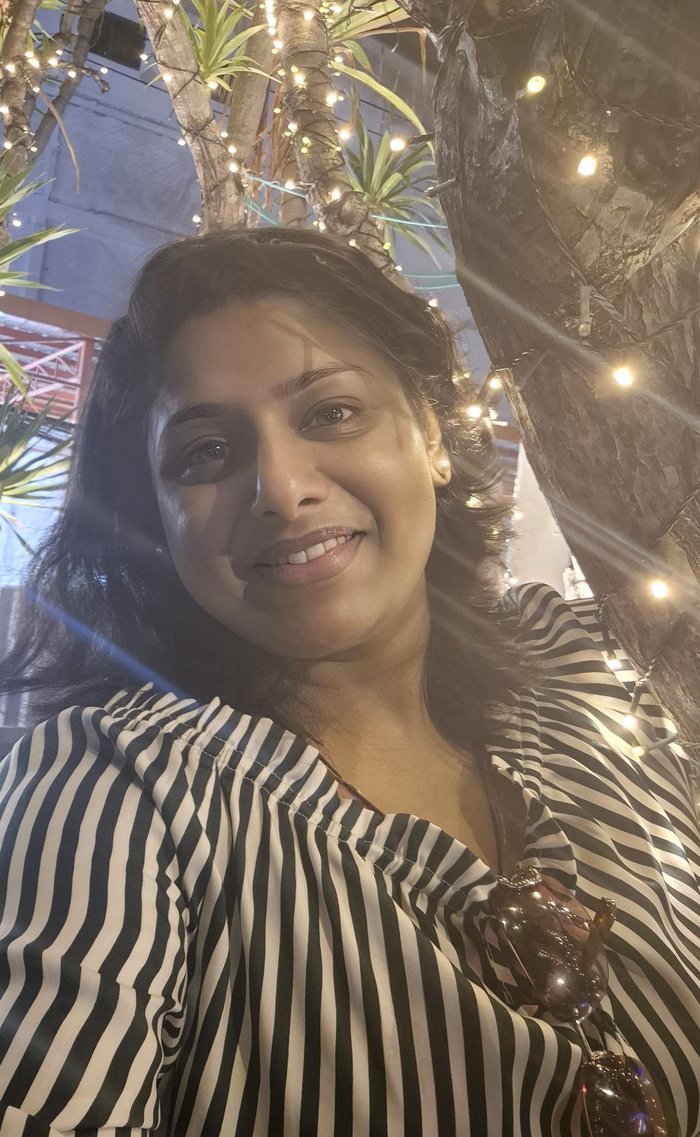
In 2022, at just 39, Binu was diagnosed with B-cell acute lymphoblastic leukaemia (B-ALL), a life-changing moment that came with shock and uncertainty. After undergoing a stem cell transplant followed by CAR T-cell therapy, she is now in remission. Here, Binu opens up about the emotional impact of a blood cancer diagnosis, the crucial role her family and faith played in her treatment and recovery, and why it’s vital for patients to have the resources and support they need to advocate for themselves.
My diagnosis
My diagnosis of B-ALL came as such a shock to me. I didn’t really have many symptoms at first. I was tired, but I put it down to working full-time and being a parent. I also noticed that I looked very pale but put that down to the fact it was winter. During the Christmas break, my husband, my son and I were playing badminton, and I slipped and pulled a muscle in my foot. It was an awful pain and even after a few days, it was still unbearable. I saw my GP, who told me to take ibuprofen, which I did. A couple of days later, I started bleeding. I had blood coming from my gums. I had bloodshot eyes and blood spots all over my body. My GP advised me to go straight to A&E, which I did. I was admitted there and then, and the next day, I was diagnosed with B-cell acute lymphoblastic leukaemia (B-ALL).
It was all a total shock. I know it was an emergency situation, and so things needed to happen fast, but I really struggled with the way the consultant delivered my diagnosis to me. He asked me if I knew what was wrong, and I said no. I truly didn’t believe there was anything seriously wrong with me. Then he said, “Have you heard of the word leukaemia? That’s what you have. You have acute leukaemia.”
I come from a South Asian background, and in my culture, cancer is not something many people tend to talk about openly, even within our own families. There’s a lot of fear and silence around that word. Hearing it spoken so directly, in that moment, was an enormous shock. On top of this, I was alone, as the hospital’s rules after Covid-19 had meant that my husband couldn’t come into the hospital with me. This made an already tough situation even harder, as it was so important to me that my husband was involved and beside me to hear this news.
Telling my family
After I received my diagnosis, I didn’t tell my family, many of whom are back home in India, straight away. I knew how worried they would be, and how tough it would feel for them with me being so far away. In my culture, family plays an integral part of our lives. Everything revolves around family. It was really important to me that they knew everything that was going on, but I wanted to have more information about my treatment first, so I waited a week. Once I shared the news, everyone reached out, understandably anxious and wanting updates. I was getting a flurry of phone-calls and trying to encourage people to remain calm. All while I was still struggling to process it all myself. I’d just received my treatment plan, which came as another shock. I was under the impression that I would have a round of chemotherapy. I had no idea of the length of time I would have to be in hospital, or the intensity of it all.
Feeling overwhelmed
Looking back, I remember feeling overwhelmed. Overwhelmed with the weight of the diagnosis. Overwhelmed by the sheer amount of medical information I was being given and expected to process. Booklets, leaflets, print out after print out about different treatments and their possible side-effects. It was an information overload. I kept thinking: "what if I couldn’t understand or process all this? The information is in English. What if I didn’t know the language? I can read this booklet, ask questions about my diagnosis and treatment, and advocate for myself. But what about those who can’t? What about people with no one to speak up for them"? To this day, this is something I feel so strongly about. People need to have the support and resources to be able to understand and get to grips with their diagnosis and treatment, and advocate for themselves, whatever their background.
I feel so strongly about people getting the support and resources to be able to understand and get to grips with their diagnosis and treatment, and advocate for themselves, whatever their background.
CAR T-cell therapy
After months of chemotherapy, I had a stem cell transplant but unfortunately, I relapsed in 2023, which was heartbreaking. There was deliberation among my hospital team as to what treatment plan to put me on, as the curative treatment option I had been given had failed and I wasn't responding to further chemo. I was then told about the possibility of having CAR T-cell therapy through a clinical trial. This felt incredibly daunting.
In many South Asian communities, there’s still a lack of information around clinical trials, and with that understandably comes fear and mistrust around them for many people. My family were apprehensive about it still being an experimental treatment. I too, had little faith in the treatment at first. I remember thinking, “if the stem cell transplant didn’t work, why will this”? There wasn’t much information or many personal stories available to reassure me at that point. There were so many unknowns, which made the decision feel daunting and difficult to come to terms with.
The clinical trials team at my hospital however, were always available to answer any questions and were honest about the risks of the treatment. Their confidence and compassion, along with the constant, unwavering support from my family, was so key in my decision to proceed with the clinical trial.
Things then moved quickly. The process began with having my T-cells collected. It felt surreal knowing that something so unique and personal was being used to create my treatment.
While waiting for my cells to be modified and returned, I felt both anxious and hopeful. It gave me time to prepare mentally and spiritually for what lay ahead. After all the anticipation and preparation, the infusion day itself felt surprisingly calm, almost anticlimactic. The procedure was straightforward, and handled with great care by the hospital team.
I had some side effects during my recovery, but my hospital team kept a close eye on me and were very supportive, which made my recovery smoother.
For me, CAR T-cell therapy was a turning point. Not just medically, but emotionally and spiritually. It represented a powerful intersection of science and faith, both requiring me to surrender control and trust in the unseen. It reminded me of the resilience we find within ourselves when faced with uncertainty and the hope that grows when compassion and knowledge work hand in hand.
Finding support
Looking back, one piece of advice I would share, is that it’s worth exploring the different types of support available and consider which might be most helpful for you. For some, this may be counselling, but support can also come through other avenues, whether that’s through community champions, chatting to other patients on the wards, or faith-based support. I am Catholic, and my faith is deeply important to me. During my time in the hospital, I was supported by a priest, who visited me regularly. Talking to someone who understood and recognised the central role my family plays in my life and the importance of supporting my parents back home, meant a huge deal to me. I didn’t feel the need to explain how I was coping or justify my choices. He never made me feel as though I was handling things the "wrong" way.
Having this support throughout my time in hospital was a real lifesaver for me, and I’m glad I spoke up about what was important to me at that time.
When I think about my diagnosis and all the treatment I had, what helped me most was keeping faith and focusing on small steps. One day, one procedure, one improvement at a time.
When I think about my diagnosis and all the treatment I had, what helped me most was keeping faith and focusing on small steps. One day, one procedure, one improvement at a time.