My journey to recovery after a stem cell transplant
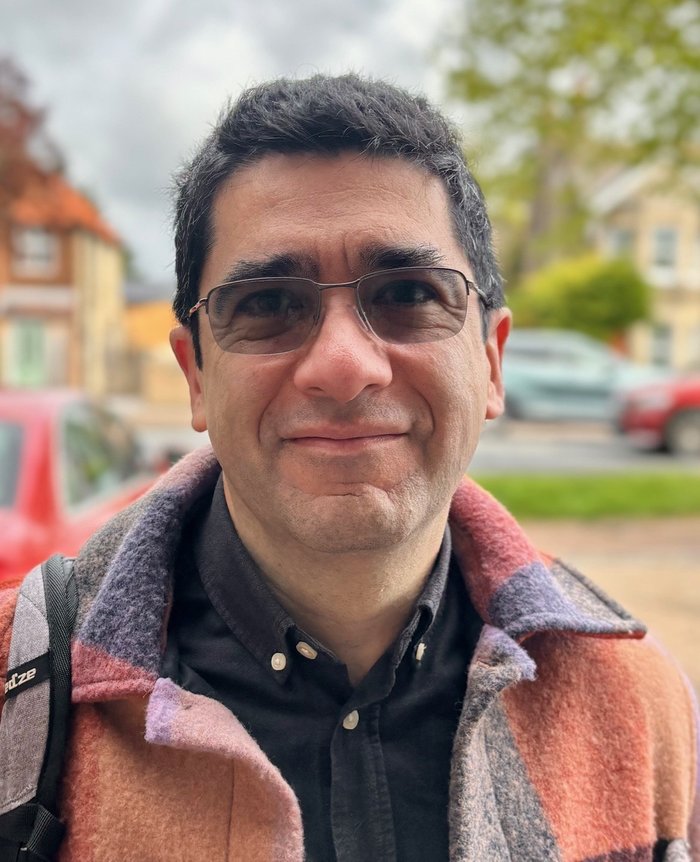
Jesús was diagnosed with Philadelphia positive B-cell Acute lymphoblastic leukaemia (PH+ B-ALL) in 2022 and went on to have a stem cell transplant. He’s now in remission. Here he opens up about the ups and downs in preparing for and going through a stem cell transplant, and what helped him throughout the long road to recovery.
My diagnosis
I was diagnosed aged 56. For a few weeks, I had been experiencing random episodes of acute chest and bone pain combined with night sweats and a mild temperature. I thought it could be a reaction to a vaccination or some kind of flu, but the episodes became more intense and frequent. On one of these instances, I called 111, and the moment I mentioned chest pain, they sent a team of paramedics to check my heart. They found nothing wrong and recommended that I ask my GP for some tests if things continued. The following day, the pain was so intense that I could hardly breathe. My wife took me straight away to A&E. The ECG and CT scans they ran seemed all fine, but the blood tests indicated something was not quite right. It was after the early results of the bone marrow biopsy arrived, that the doctors confirmed that it looked like I had acute leukaemia. I was admitted to the hospital straight away.
That was the beginning of my journey. My head was still unable to process what was going to happen. It took another couple of days to get my full, confirmed diagnosis. The genetic tests confirmed I had Philadelphia positive B-cell acute lymphoblastic leukaemia (PH+ B-ALL).
The doctors told us that I would very likely need a stem cell transplant as part of my treatment. Finding a matched donor has been perhaps one of the most anxious moments for me. Arranging HLA typing for my family in a different country, being told they were not suitable and then having to wait in the hope they would find a suitable match for me. Not everybody manages to get a full match, so when my consultant told me they had identified one match and one backup, I was over the moon.
'The Talk'
One of the most difficult moments for me was "The Talk". The moment, after I reached remission (a massive feat in itself), when my consultant went into detail about the risks and potential complications associated with having a stem cell transplant, as well as the probability of relapse. My consultant, who has always been so supportive and compassionate and kind, told me the truth about what to expect: that with my condition and my age there was a non-trivial risk (over 40% chances), that I might not make it due to a serious infection, complications, or a relapse. It took a few hours for the full implications to really land, and it was quite a sobering moment.
I don’t think there is a ‘right’ way of breaking this type of news. It was hard to hear: “if your transplant fails, and there is a relapse, there are no more treatments we can offer”. Back then I would have liked perhaps a ‘sweetened pill’, maybe a “however, there are some other treatments we could explore if that moment arrives”.
At that time though, there were not yet any CAR T-cell treatments available for relapsing/refractory adult B-ALL. It is great to see that in such a short time span, B-ALL patients have access to more options.
The truth is that my doctor and nurses have been constantly by my side, rooting for me, celebrating the progress, and always offering a positive and supportive outlook. Funnily enough, after my transplant, my doctor kept highlighting there were options: “if there’s a relapse, we can use newer generation TKIs, there are other things we can try”.
In retrospect, although it was a difficult moment, I think it was the right thing for me to understand there are no guarantees, that this was no walk in the park. And, even without ‘the talk’ we could see how some of our fellow patients didn’t make it. This was the reality coming to the clinic. That we might not see them next time. I used to tell myself that some of us might not make it through during the next 4-5 years. For me, it was a moment of connection, of solidarity. It was not about who would get lucky or not, but rather about sharing a journey with loads of uncertainties. And that created a profound feeling of kinship with people I had never met before. A sense of community, of shared humanity, which has been truly precious.
This informal community of patients and partners was crucial for me. Checking in on each other, receiving messages of support on the bad days. Focusing on the day, and however difficult, recognising the value of another step, the value of making it through it. I remember a picture a fellow patient and friend sent me. It said: “Some days you’ll move mountains, other days you’ll move from the bed to the couch. Both are necessary.
This informal community of patients and partners was crucial for me. Checking on each other, receiving messages of support on the bad days.
The build up
As I learnt more about the stem cell transplant process, one of the things that bugged me was the ‘nasty’ impact that could come with the conditioning chemotherapy prior to the stem cell transplant. My biggest concern was getting an infection. All of these made the weeks prior to my stem cell transplant quite full of trepidation. It was a long process full of mixed emotions. Part of me wanted to get over with it and come out the other end, ready to rebuild my strength and my life! But I could not entirely shake off the anxiety about all the uncertainties.
The moment of truth
After I had confirmation that my stem cell transplant was going ahead in a few days, I was admitted to hospital to start my conditioning chemotherapy treatment. Suddenly, all my worries and anxieties melted into the background. It was a feeling of “right, this is it! I just need to focus on the treatment and follow the process until the end”. And I was determined to do it well. The day the nurses brought me some iced lollies to avoid mouth and throat sores caused by the conditioning chemotherapy, I finished them all and asked for more! If I was told I should keep active, I would keep walking around the room to get some steps on the clock. One of the nurses even brought a static bike to my hospital room… so I tried to put some minutes on it as best as I could over the next few days!
The day arrived. Day 0. 19th of April, a date I’ll never forget. The cells had landed at Heathrow airport. They had made their way from my wonderful donor in Florida, United States, in less than 48 hours and were being tested at the hospital. I didn’t know how to react when the nurses arrived in the room with that bag full of donor cells. All the build-up over the last few months had been a true rollercoaster and now it was the moment of truth. Somehow, I was expecting something ‘bigger’. The nurse connected the bag to my Hickman line… and in about 10 minutes it was over! “Is that it?” I asked. “I’m afraid so!”, confirmed the nurse with a chuckle, “a bit of an anti-climax after all this time, isn’t it?”
The wait
Every morning, I found myself glued to my phone, anxiously checking my blood counts, especially my neutrophils, a type of blood cell that helps to fight infection. We were waiting for my donor’s stem cells to start working in my bone marrow to make healthy new blood cells, a process called "engraftment". I knew engraftment could take two to three weeks to begin, but I was determined to beat the odds. Around day 11 or 12, I finally saw the first signs of those neutrophils appearing! Just a couple of days later, I got the news that I could go home, as long as I was careful to avoid infections.
I could not feel more grateful to and proud of my donor! I know, even if things hadn’t worked out, he would still remain a hero in my eyes. I studied biology for my degree, and I’ve worked in this area all my life, but even today, when I think about it, I’m still amazed about the complexity, richness and the resilience of our bodies, even when facing such testing conditions.
I could not feel more grateful to and proud of my donor! I know, even if things hadn’t worked out, he would still remain a hero in my eyes.
The aftermath
I knew that the outcome of my stem cell transplant was uncertain. For me it was important to focus on short-term, small objectives, like slowly regaining my strength. Short walks in the garden, then venturing a bit further. Pushing myself to climb stairs when going to clinics. Every small advance was a reason to celebrate. And those small celebrations will carry you a long way, especially through the really tough times. I had an episode of acute Graft vs Host Disease (GvHD). Fortunately, it was cleared up through a course of steroid treatment, but this didn’t come without its side effects. My main issue was managing the mental rollercoaster the steroids caused, which the nurses and other patients that had gone through it warned me would happen. I would feel almost super-human at times, then suddenly angry, restless, and unable to sleep. The withdrawal brought waves of sadness and sometimes I’d find myself wanting to cry for no clear reason. For me it was important to recognise it was the meds playing with my head, and that sometimes it was good having a quiet tear in the garden to help me re-set.
After my GvHD episode I had another knock back. It was found that engraftment had not fully worked after measuring my chimerism levels. This meant my body wasn't producing enough donor cells. This meant that I needed to restart Imatinib (TKI) chemotherapy and also that I needed additional donor lymphocyte infusions (DLIs), to top-up my donor’s immune T-cells. Each DLI could trigger GvHD, and it meant a few weeks of "wait-and-see" after every infusion. This brought back some anxiety initially. Anxiety that GvHD could kick in again, this time more aggressively, but also that the leukaemia could come back. In moments like these I always tried to focus on the present, taking each day as it came, and not leaving room in my head to obsess about ‘what ifs’.
Four DLIs and over a year later, my body had surpassed the 90% mark for donor blood cells! To me this is again another example of how important it is that you equip yourself mentally for a long-haul journey. There is no clear finishing line, that is why finding the ability to enjoy the day becomes precious. A good day, feeling energetic and healthy is to be used to its fullest.
I knew that the outcome of my stem cell transplant was uncertain. For me it was important to focus on short-term, small objectives, like slowly regaining my strength. Short walks in the garden, then venturing a bit further.
Becoming 'normal' again?
Looking back at my journey since the day I received my diagnosis, perhaps the hardest bit has been to accept that I’m not my old ‘usual self’ and perhaps I will never be. Going back to work, to familiar environments, created expectations that I found difficult to fulfil. This was mostly my own expectations about myself and what I needed to achieve, because my brain was going back in time and expected my body to behave as it used to. I learned the hard way that when I over-exerted myself mentally or physically, it later brought several days of higher fatigue and difficulty to focus.
I also had to manage expectations from others. Family members, colleagues and friends. They kept (and still do) saying “you look great!” and I felt they somehow assumed that I was totally back on full form. I had to remind them, “I tire more easily”, “can we have shorter meetings with fewer people”, “can you please give me a summary rather than the full story?” Most of the time it was okay, but occasionally I felt like I was being difficult (I normally am… but this was a new addition!).
I've had to be more protective with my time and my energy. It feels like my batteries deplete more easily, so I need to manage how I use them.
This has all caused me to re-think what would be the best use of my time going forward. To bring meaning to my days, to add a purpose, because I will never be able to shake off the fact that I know my time is finite. And this is a reminder that every day is precious, and I’d rather spend it well.
Despite all the stress, and the uncertainty, and the difficult moments, I consider myself very fortunate. Fortunate for all the support and the care and the affection I have received. Fortunate that I've met so many incredible human-beings during my journey.
In a way it is my way of honouring those patients and families that shared their journey with me and my partner. I keep saying this to my friends and family: “whatever comes next, I don’t want to have any regrets, I want to go on a high!”.