
Finding new ways to treat chronic myeloid leukaemia (CML)
Understanding more about a key protein could help create new treatments for CML.
Most people with CML have a protein called BCR-ABL switched on inside their cells which causes the growth of cancer cells. In this project, Dr Oberoi and her team want to understand more about this protein to see if they can find ways to switch it off.
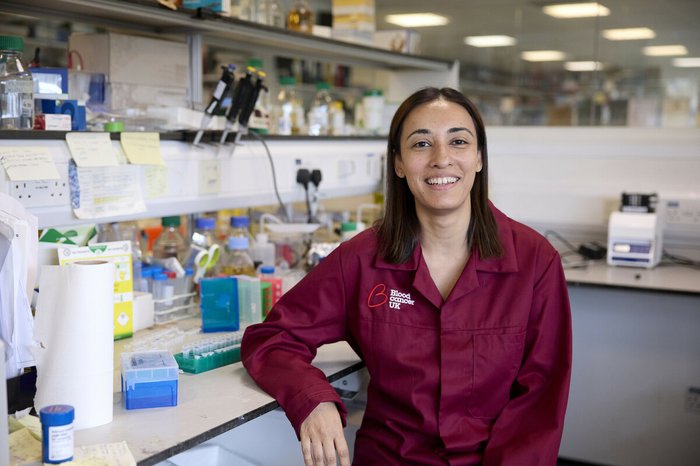
Dr Jasmeen Oberoi
Project information
- Lead researcher
Dr Jasmeen Oberoi, University of Sussex
- Research team
-
- A team at University of Sussex
- Related conditions
-
- Chronic myeloid leukaemia (CML)
- Research type
-
- Non-clinical
- Region
-
- South East
- Grant awarded
-
- Project Grant
- Status
- Ongoing
- Funding award date
- January 2023
- Amount awarded
£240,000
The challenge
Chronic myeloid leukaemia (CML) is a slow growing type of blood cancer that can be treated, but currently cannot be cured.
Around 700 people are diagnosed with CML each year in the UK. Most people with this type of blood cancer have a protein called “BCR-ABL” switched on inside their cells, which causes the cells to divide and grow uncontrollably.
Understanding more about this protein could help us create new treatments for the disease.
The project
Dr Jasmeen Oberoi and her team want to build a 3D model of the BCR-ABL protein to understand more about how it works and how it causes cancer. They want to look at the shape of this protein and how it interacts with other molecules in the cell.
By detailing the interactions, the team hope to find ways they might be able to block these interactions and stop the cancer cells from growing.
The future
The hope is that this project will lead to a better understanding of BRC-ABL, and how it works with other molecules inside cells to cause cancer cells to grow.
This will mean the team can go on to look at new ways to stop this protein from working, which could lead to new treatments being developed for CML.
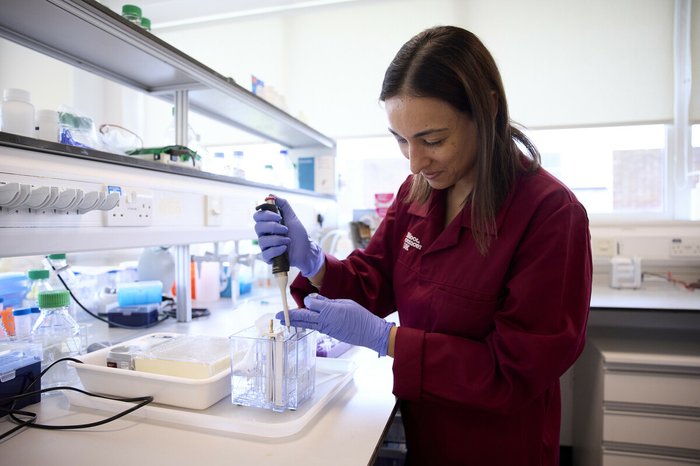
Dr Jasmeen Oberoi working in the lab
Find out more
Our research
Thanks to our blood cancer community, we've invested over £500 million into research since 1960. Our discoveries have led to better and kinder treatments, and transformed lives.
Support for you
Get free support from our specialist nurses, join our online community and access information you can trust.
Blood cancer types
Understand all the different types of blood cancer and find information and support.
Clinical trials
Clinical trials are how new treatments are developed and improved. Find information and support at every stage of your journey.