
Understanding changes in AML stem cells
Acute myeloid leukaemia (AML) is a fast growing and aggressive type of blood cancer. Professor Bonifer and her team want to learn more about alterations in genes of AML cells to find new ways to treat it.
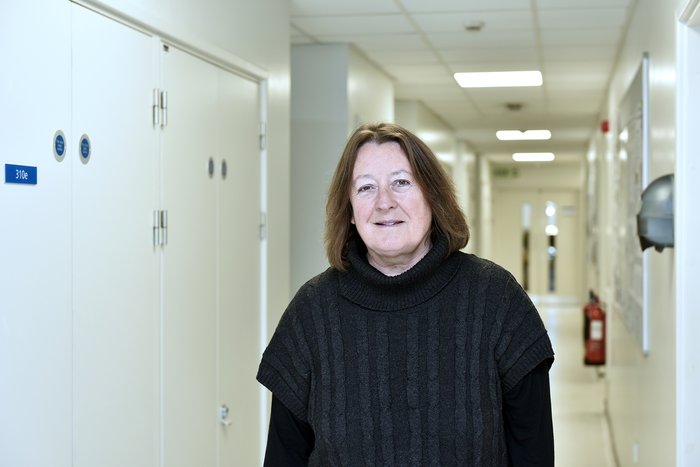
Professor Constanze Bonifer, University of Birmingham
Project information
- Lead researcher
Professor Constanze Bonifer, University of Birmingham
- Research team
-
- A team at University of Birmingham
- Related conditions
-
- Acute myeloid leukaemia (AML)
- Research type
-
- Non-clinical
- Region
-
- The Midlands
- Grant awarded
-
- Programme Continuity Grant
- Status
- Completed
- Funding award date
- October 2020
- Amount awarded
£264,000
- Project completion date
- December 2023
The challenge
AML happens when your body doesn’t produce enough healthy blood cells. It is an aggressive type of blood cancer. It’s thought that something goes wrong in the instruction manual of blood stem cells, which causes them to grow and divide uncontrollably.
The project
This project will build on many years of support from Blood Cancer UK.
This research will focus on a specific alteration in AML that Professor Bonifer and her team have spent years studying.
In most cases, it’s not just one alteration that causes cancer, but a cascade of alterations that can cause disease.
In this research, the team hope to understand this cascade in more detail, to precisely understand which alterations cause the excessive growth of cancerous cells. They will then look to see how they might be able to reverse this.
The future
The hope is that in the future, this research will feed into developing more targeted treatments for people with AML that don’t include chemotherapy or a stem cell transplant.
This will hopefully improve the survival rates for people with this disease.
Find out more
Our research
Thanks to our blood cancer community, we've invested over £500 million into research since 1960. Our discoveries have led to better and kinder treatments, and transformed lives.

Support for you
Get free support from our specialist nurses, join our online community and access information you can trust.

Blood cancer types
Understand all the different types of blood cancer and find information and support.

Clinical trials
Clinical trials are how new treatments are developed and improved. Find information and support at every stage of your journey.