
Understanding how MPN develops
In this project, Professor Hitchcock wants to understand more about how MPN develops.

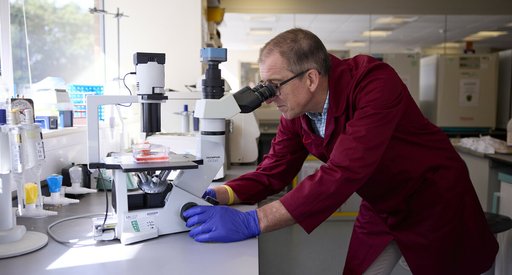
Professor Ian Hitchcock, University of York
Project information
- Lead researcher
Professor Ian Hitchcock, University of York
- Research team
-
- A team at University of York
- Related conditions
-
- Myeloproliferative neoplasms (MPN)
- Research type
-
- Non-clinical
- Region
-
- Yorkshire
- Grant awarded
-
- Project Grant
- Status
- Ongoing
- Funding award date
- January 2023
- Amount awarded
£248,901.16
The challenge
Myeloproliferative neoplasms (MPNs) is a type of blood cancer that affects around 4,000 people every year in the UK. But we still don’t know enough about how MPN develops and the drugs we have to treat the disease aren’t very effective.
The project
In this project, Professor Hitchcock and his team want to understand more about how blood cells communicate.
He has found a molecule that sits on the surface of a blood cell that he thinks turns on a process that leads to MPN and allows cells to turn cancerous.
In this project, they want to understand more about this, and more about how MPN develops, to find out whether there might be a way to stop it from happening.
The future
The hope is that by understanding more about how MPN develops, the team might identify new targets for treatments and new ways to diagnose the disease.
This could lead to new and effective ways of treating the disease in the future.
The output from this research is very likely to be transferable to other blood cancers and indeed other conditions. Not only will this research identify how blood cancers develop; but will likely be able to identify who may be at risk...
- Patient Voice Grant Advisory Network Member, living with CML
Find out more
Our research
Thanks to our blood cancer community, we've invested over £500 million into research since 1960. Our discoveries have led to better and kinder treatments, and transformed lives.

Support for you
We’re here for anyone worried about or affected by blood cancer. Call our free blood cancer support line, email us or join our online community.

Blood cancer types
Understand all the different types of blood cancer and find information and support.

Clinical Trials Support Service
Find out how our Clinical Trials Support Service can help you.