
Understanding the molecules that help myeloma cells to grow and survive
Professor Karadimitris has identified molecules that work together to cause myeloma cancer cells to grow in numbers and survive. He wants to understand more about how they do this so he can design and develop a new treatment for people with myeloma.
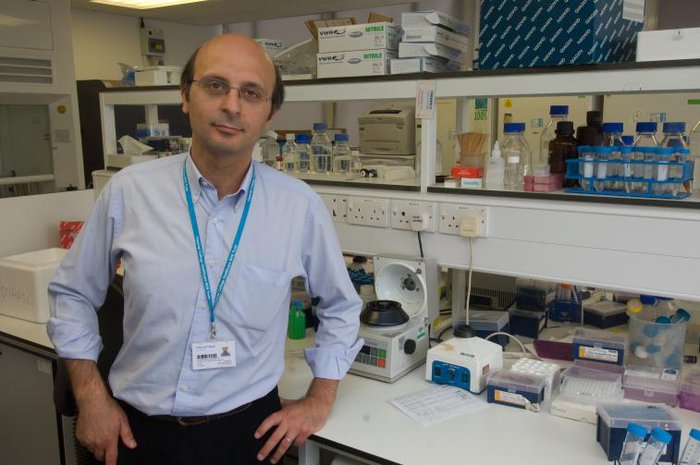
Professor Karadimitris in the lab
Project information
- Lead researcher
Professor Anastasios Karadimitris, Imperial College London
- Research team
-
- A team at Imperial College London
- Related conditions
-
- Myeloma
- Research type
-
- Non-clinical
- Region
-
- London
- Grant awarded
-
- Project Grant
- Status
- Ongoing
- Funding award date
- September 2023
- Amount awarded
£279,762.72
- Project completion date
- September 2023
The challenge
Myeloma is the second most common blood cancer that affects white blood cells called plasma cells. Plasma cells are made inside our bone marrow (the spongy material inside some of our bones) and are needed to make antibodies.
Antibodies are molecules that circulate in our blood, that find and kill bacteria and viruses that cause infections. Although new treatments have improved the survival of myeloma, the disease still has no cure.
The project
Professor Karadimitris and his team have identified molecules that are thought to allow myeloma cancer cells to grow in numbers and survive.
They plan to conduct some experiments in the lab to understand more about how these molecules work together to do this. They are going to look at the structure of these molecules to look at how they fit together and interact with other molecules in the cell with the aim of finding ways to disrupt this process.
The future
At the end of the project, the team hope to have a better understanding of how molecules inside cancer cells interact to cause myeloma cells to grow in numbers and survive.
They hope that this research will give them the knowledge to design and develop a new and better treatment for people with myeloma, getting us a step closer to a day where no lives are lost to this disease.
Find out more
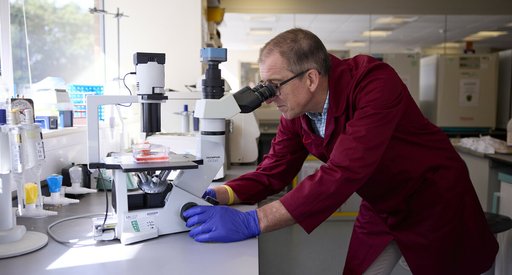
Our research
Thanks to our blood cancer community, we've invested over £500 million into research since 1960. Our discoveries have led to better and kinder treatments, and transformed lives.

Support for you
Get free support from our specialist nurses, join our online community and access information you can trust.

Blood cancer types
Understand all the different types of blood cancer and find information and support.
Clinical trials
Clinical trials are how new treatments are developed and improved. Find information and support at every stage of your journey.