
Understanding whether we can prevent acute myeloid leukaemia
In this study, the team want to understand whether it's possible to prevent people from developing acute myeloid leukaemia.
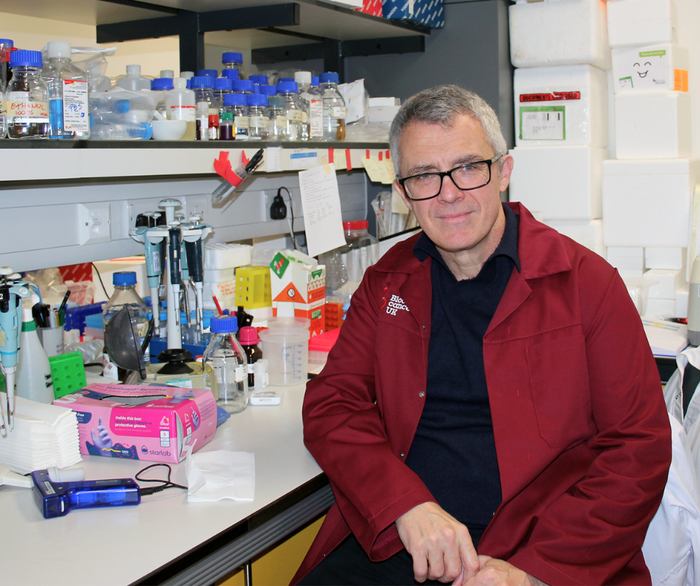
Professor George Vassiliou in the lab
Project information
- Lead researcher
Professor George Vassiliou, University of Cambridge
- Research team
-
- A team at University of Cambridge
- Related conditions
-
- Acute myeloid leukaemia (AML)
- Research type
-
- Non-clinical
- Region
-
- East Anglia
- Grant awarded
-
- Project Grant
- Status
- Ongoing
- Funding award date
- July 2021
- Amount awarded
£248,683
- Project completion date
- April 2024
The challenge
Acute myeloid leukaemia (AML) is an aggressive type of leukaemia which has poor outcomes for adults.
Professor Vassiliou has previously found that people with AML have cells in the blood that are ‘pre-leukaemic’ years before they are diagnosed with the condition. This means there may be a way to prevent the disease although it’s currently unclear how to do this.
The project
In this project, the team will try and find ways to prevent these pre-leukaemic cells from progressing into full blown leukaemia.
The most common form of AML is caused by a mutation in a gene called DNMT3A. When this gene is mutated, it causes others to compensate which causes cells to grow uncontrollably leading to AML.
The team want to identify if the gene DNMT3A is responsible for cells becoming ‘pre-leukaemic’ and whether they could intervene at this stage to stop other cells compensating for this mutation, preventing the development of AML.
The future
If this work is successful, it could help create an entirely new approach to blood cancers – one that focuses on prevention before they become a serious problem.
It could also mean individuals have milder treatments and would give everyone with AML the best possible chance of survival.
Find out more
Our research
Thanks to our blood cancer community, we've invested over £500 million into research since 1960. Our discoveries have led to better and kinder treatments, and transformed lives.

Support for you
Get free support from our specialist nurses, join our online community and access information you can trust.

Blood cancer types
Understand all the different types of blood cancer and find information and support.

Clinical trials
Clinical trials are how new treatments are developed and improved. Find information and support at every stage of your journey.