
How taking part in a CLL clinical trial led to Nicky's remission
Nicky shares what it was really like to go through the FLAIR trial for CLL, from the anxious wait to find out if she qualified, to stopping medication and living symptom-free.
After three years on watch and wait, Nicky's CLL began to progress and treatment became unavoidable. She chose to apply for a place on the FLAIR clinical trial, not knowing whether she would qualify or which treatment group she would be placed in. Here she reflects honestly on that experience, and what it has meant for her life since.
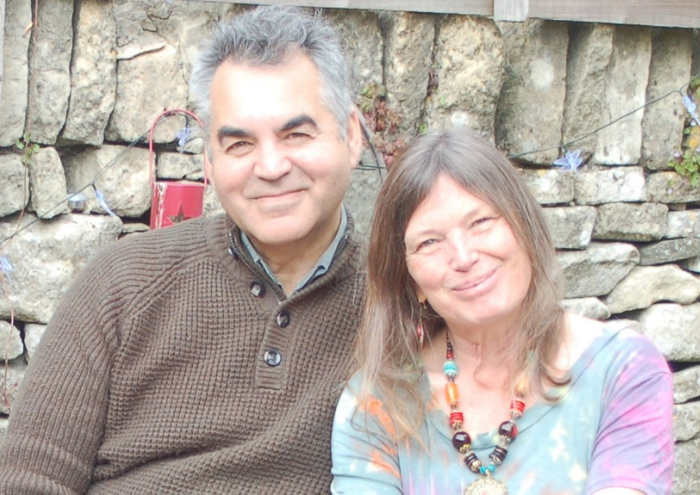
Nicky's story
I was diagnosed with chronic lymphocytic leukaemia (CLL) just before Christmas in 2015. It had been incidentally discovered on a breast scan. My results came three anxious weeks later. I was, at first, told they'd found non-Hodgkin lymphoma cells. My dad had died from non-Hodgkin lymphoma at the young age of 57, and in a few days’ time, I myself would be turning 56 …
My husband and I were burdened with the devastating news on Christmas Eve 2015 by a breast consultant who couldn’t give us any details. We had to wait until early January to hear anything further from the haematology/oncology department I was being referred to.
What we were told had understandably struck fear into our hearts.
We went away fearing the worst...
Over the festive period, we kept up a cheerful front in the daytime, making sure nobody suspected anything was amiss. But at night, as soon as we were alone, we'd be on the computer trying to take on a dizzying range of information – terrifying ourselves about the different possibilities.

What happened next
Once we got to know the haematology team, I felt buoyed up by their positivity and faith in the new treatments coming in. It made me smile when one young doctor reflected (as if I could do anything about it!), "the longer you can hold out without needing us to intervene, the better – the more options and better researched treatments there will be."
Have you ever noticed that at times when you’re unwell there seems to be an objective, scientific part of your brain that takes an interest in the process you’re going through? I often have.
I’ve also noticed that hospital staff seem to engage more with you when you show a greater interest in your condition and treatment options.
After three years on ‘watch and wait’ – often referred to as ‘watch and worry’ by patients – things began progressing.
My lymphocyte count began to soar, and the swelling in my armpits and groin became as pronounced as the visible ones in my neck. It had happened so gradually that it hadn’t bothered me unduly. After all, I wasn’t feeling any pain or experiencing other clear symptoms.
The most difficult thing for me at the time was that my daughter (then 21) was hardly able to look at me.
I could feel an emotional distance growing between us. For her, the unavoidable physical change screamed 'cancer' with every glance.
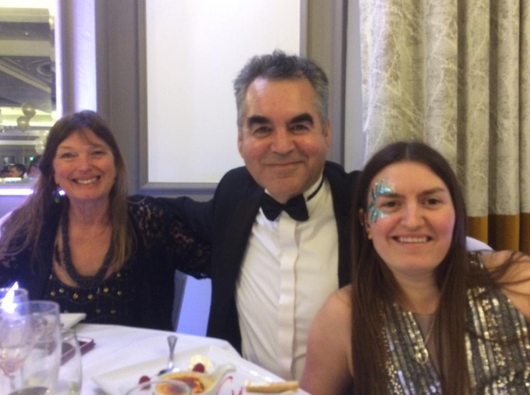
Needing to start treatment
In October 2018, when treatment became inevitable, I spoke with my treatment team about my options.
This led me to apply for a place on a Leeds-based clinical trial that had been running for just over four years.
FLAIR is a Phase 3 randomised clinical trial which compares treatments involving targeted drugs – ibrutinib, or ibrutinib and venetoclax (pills each morning) – with standard first line treatment (chemotherapy and intravenous immunotherapy) for previously untreated CLL.
I had been given reams of literature describing in alarming detail each of the possible treatments and their side effects. The terminology alone stirred up alarm.
Once you’ve decided to apply for a trial, not knowing whether you’ll meet the inclusion criteria, or which randomised group you’ll fall into, makes the pre-enrolment phase particularly stressful.
At the end of an anxious summer, I found out I’d met the trial’s criteria – just!
Treatment on the trial
I was relieved to discover I’d been randomised to my first-choice treatment option. This was the cutting-edge combination of ibrutinib and venetoclax, which hadn’t historically been available to anyone in the UK unless you were part of a trial. I felt like I’d hit the jackpot.
It sounds hard to believe, but within the first week, I noticed the swelling in the lymph nodes abating.
How do the drugs in the clinical trial work?
Three potent ibrutinib tablets a day efficiently despatch many of the cancer cells in your bloodstream. The second powerhouse drug, venetoclax, is introduced later, targeting residual rogue lymphocytes.
You’re monitored closely while this drug is added to the mix. Once you’re settled on the required dose of the dual medication, venetoclax has to be taken each day too.
My father had been keen to take part in a clinical trial, but unfortunately didn’t get the opportunity to do so. I reconnected with the retired oncologist who’d looked after Dad 20 years before, when the science was in its relative infancy, on the internet and he reassured me: "you're on the very best treatment available in the UK at this time."
My personal experience on the FLAIR trial was incredible. Within nine months, I was in complete remission.
Impact of being on a clinical trial
I was particularly fortunate to have had a consultant that patiently answered my many questions. The kindness of the clinical trials team made all the difference, especially when I had to make tough decisions.
The treatment seems to have had a miraculous effect. At a phenomenal cost, the drugs and extensive tests and care afforded to us in the UK by our wonderful NHS are an incredible gift. I was able to stop taking medication completely after two years.
Today, I’m living a normal, symptom-free life again, and to date, I remain in remission.
By taking part in trials, we’re not only able to receive treatments before they’re generally accessible in the UK, but we can also help ensure that ever-improving treatments will become available – for people today and for generations to come.
If you'd like to read more about Nicky's experience, click here to read her story in full.
Clinical trials navigation service
If you're ready to talk about trials, a specialist clinical trials nurse can help. They can explain information you've received, and answer questions, or search for relevant UK trials, providing a plain-language summary to discuss with your doctor.
Decide if a trial is right for you
Explore benefits, risks and common worries to help you decide.
Benefits and risks of taking part in a clinical trial
Weigh up what taking part might offer, and what's worth thinking about.
Questions to ask your doctor
Find out what to ask your doctor or nurse before you decide.

Common worries about clinical trials
Honest answers to the questions people most commonly worry about.