
Your treatment for acute myeloid leukaemia (AML)
For many people, the aim of treatment is to get rid of the leukaemia and to cure the AML.
AML is a fast-growing type of leukaemia, so strong treatment is usually needed for this.
Funding information
The following pharmaceutical companies and charitable organisations helped fund this information, but had no influence over it: Abbvie, AstraZeneca, Incyte, Jazz Pharmaceuticals, Kyowa Kirin, Roche, Sobi UK, The Garfield Weston Foundation, The Steel Charitable Trust and The Grace Trust.
What you need to know
- AML treatment usually involves a mix of drugs, including chemotherapy.
- A hospital team will manage your treatment – ask them questions!
- Treatment is influenced by your fitness, the AML type you have, and your aims.
Our Support Services can make going through treatment more manageable
What treatment will I have?
There are many different treatment options for AML, and everyone’s treatment plan is personal to them.
Some people can have their treatment as part of a clinical trial, which can often allow you to have newer types of treatments. Most of today’s most effective treatments are the result of previous clinical trials, carried out over many years.
Your treatment will be managed by a hospital team who are specialists in blood cancer.
Treatment usually involves a combination of drugs. Some are chemotherapy drugs, but there are other types of cancer drugs too. Some are given into the vein (intravenously), but others are taken as tablets or injections. Most people will need to be in hospital for some of their treatment.
Your doctor will always be looking at what they think is the best treatment for you. They’ll consider your general fitness and the specific type of AML you have. They’ll talk to you about what you prefer to happen.
Your treatment plan might change too. It’s normal to switch between different treatments at different times.
There are two main groups of treatments for AML:
Ask your doctor if you’re not sure which type of treatment you’ll be having.
Questions to ask your hospital team
Here are some questions to ask about treatment, to help you understand more about it:
- What treatment do you recommend and why?
- What will it involve and how long will it take?
- What is the aim of the treatment?
- Who do I contact if I think of more questions later?

Blood Cancer Heart to Heart podcast for family and friends
"I thought this is it. I’ve driven here as your girlfriend, and I've left as a doctor, a pharmacist, a nurse, a carer - everything all rolled into one."
Tips for a better hospital stay
Other people with AML find these things helpful at hospital:
- Notepad and pen – To write down any questions for your doctor, or even to plan your visitors.
- Drawings or cards from children – They brighten up your room, but they also give children something positive to do.
- Being honest about whether you want visitors – Sometimes you might not feel like it, and that’s fine.
- Home-cooked food – Just check with your hospital team first.
- Home comforts – Items like your own pillow, wash bag or mug.
- Photo frames or a colourful blanket – Anything to brighten up the room.
- Eye mask and ear plugs – Very helpful for sleeping in a hospital.
- Chosen person to get updates – You can give your hospital team permission to give updates to a close family member or friend. This is helpful as sometimes it’s hard to remember everything yourself.
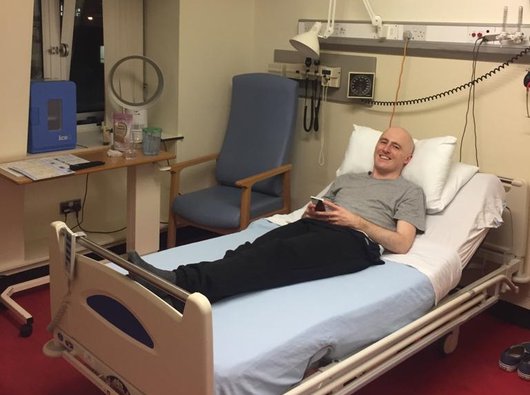
"Having goals during treatment is important. You need some purpose.
"Mine were things like standing up in my hospital room 10 times a day, or doing all my recommended doses of mouthwash."
Graeme, diagnosed with AML in 2017.
Tips for when you're at home
Tips for taking care when you come home from hospital:
- Have contact details for your hospital team – including who you can contact on evenings and weekends – keep them somewhere easy to find.
- Keep the house generally clean and warm – If you’re worried about being able to do this, tell your hospital team.
- Have food ready at home that’s quick and easy to make – Ready-made meals or snacks are fine too – the important thing is that you eat.
- Try to move around each day – Even just walking around the house will be good physical activity that can help improve your strength.
- Take time to rest, but when you have some energy, do things that you enjoy too – You need both.
- Know how to reduce the risk of catching an infection – This is important for you and anyone who looks after you to know. See our information about symptoms of an infection.
- Consider support to manage work, money and benefits – Try to make these less of a worry while you are recovering. See Work, money, childcare and help at home.
There are many more tips, and stories from other people with AML and their families, in our booklet Acute myeloid leukaemia (AML): your guide to diagnosis, treatment and life after AML.
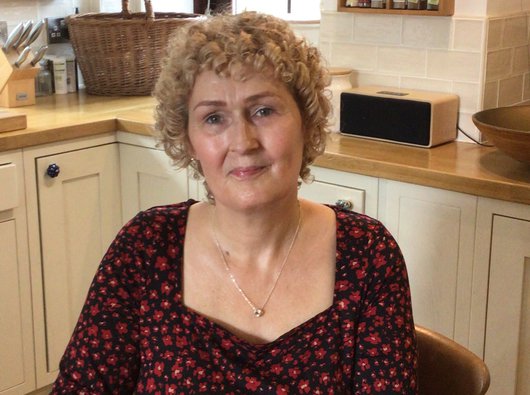
"When I went home in between chemo cycles, I spent lots of quality time with my family.
"My other goal was to do more on my feet, to build myself up and get stronger for the next cycle."
Rebecca, diagnosed with AML in 2020.
Key things to know about treatment
A few key things to remember:
- You should be given a named key contact, usually clinical nurse specialist (CNS), and a phone number or email in case you have any questions or worries. If you do not know yours, ask your hospital team.
- You should also be given a hospital phone number to call if you are unwell and need advice on what to do quickly.
- Your doctor and the rest of your hospital team are there to answer your questions. Do not be afraid to ask them whatever you want to know. It’s their job to make sure you understand what’s happening.
- You can contact us for help preparing for appointments or talking to your hospital team – this is something we talk to people about a lot. If you don’t feel confident talking to your hospital team, contact our Support Service.
For more specific information about treatment and different drugs, read about intensive treatments or less intensive treatments.
The emotional impact of treatment
Going through treatment can be hard, even traumatic, for the person with AML and their family and friends.
But other people with AML and their families have lots of tips to offer from their experience, which you’ll see throughout these web pages.
Everyone reacts in their own way and however you are feeling is normal.
If you need someone to talk to, contact our Support Service. Family and friends can contact us too. We’re here to help you through it. Call us on 0808 2080 888.
Find lots more information about dealing with the practical and emotional side of AML Coping with AML.
It’s often helpful to talk to other people with AML about how they have coped during treatment.
Research and the future of AML treatment
Treatment for AML continues to improve thanks to research finding better drugs and better ways to monitor AML.
Here are some examples of recent advances in AML treatment and possible future advances:
Our understanding of AML has improved
The discovery of certain genetic changes (mutations) that happen in AML cells means that newer treatments are much better at targeting and destroying leukaemia cells.
We have better predictions about who needs which treatment
Using extremely sensitive tests to check for measurable residual disease (MRD) has also improved survival in AML, because we’ve got much better at knowing when further treatment is needed to prevent a relapse.
Clinical trials are happening in the UK to test new drugs
Clinical trials are key to improving treatment for AML. Current trials are looking at new combinations of drugs, which may be better than existing treatments. We can help you find out if there are any clinical trials you might be eligible for, through our Clinical Trials Support Service.
Research continues to improve understanding and treatment of AML
Despite all the advances, AML is still a difficult blood cancer to treat. We will continue to fund research that we are confident will make life better for people with AML, whether by improving survival or making treatments less toxic. You can find out more about the research we are funding right now into AML.

The road to beating AML
Professor Brian Huntly talks about the massive changes in research and mindset that have happened over the years for AML, and what we need to do next to improve survival.