
Myeloma tests
Doctors will run a range of tests to confirm if you have myeloma and, if so, whether it needs treatment right away.
What you need to know:
- You will need a range of tests to help diagnose myeloma and decide the most suitable treatments for you.
- After diagnosis, you’ll have regular tests to monitor the myeloma and how well your treatment is working.
- If you have smouldering myeloma, you’ll have regular tests to show if it becomes active and needs treating.
Why you need tests
You need tests to decide whether you have:
- active myeloma that needs treatment
- smouldering myeloma that doesn’t need treatment now, but may do in the future
- MGUS, a condition that doesn’t need treatment, but which can lead to myeloma in a small number of people (1 in 100 each year).
Some of the tests on this page will be done regularly to monitor the myeloma and decide when to start treatment.
Some will be done during and after treatment. This is to see how well the treatment has worked and if you are in remission. Remission is where there are few or no myeloma cells left.
Ask your hospital team to explain what tests you are having and what they are for.
Tests to diagnose myeloma
You may have the following tests to find out if you have myeloma or a related condition.
Full blood count
A full blood count (FBC) is a simple blood test that measures the different types of cells in your blood.
It will show if you have anaemia. Anaemia is caused by a low level of red blood cells and is common in myeloma. It can make you feel tired and short of breath.
A blood test is often the first step towards getting a diagnosis. If the results show anything unusual, you will have other tests to find out more.
Some people learn they have myeloma by chance after having a blood test for another reason.
If you do have myeloma and need treatment, you will have regular FBCs to check how well the treatment is working.
Other blood tests
You will have a range of other tests. These are usually blood tests:
- Total immunoglobulin levels – this measures the total level of normal and abnormal antibodies in your blood. If one or more of these levels is too high or too low, this can be a sign of myeloma.
- Serum protein electrophoresis – this measures the level of abnormal antibodies (paraprotein) in your blood. This helps doctors decide if you have myeloma and if you need treatment.
- Immunofixation – this is a more sensitive test for paraprotein. It also shows the type of paraprotein in your blood. It helps doctors work out the best way to treat the myeloma. It can also detect if you still have paraprotein left after treatment.
- Serum free light chain (SFLC, or light chain assay) – this shows if there are small proteins called light chains in your blood. Light chains in the blood are common in myeloma. If you have light chains but no paraprotein, you may have a type of myeloma called light chain myeloma.
- Serum calcium test – this checks the level of calcium in your blood. If there is more calcium than usual, it can be a sign of bone damage caused by myeloma.
- Urea, creatinine and electrolytes test – this looks at the level of these substances in your blood. It gives information about how well your kidneys are working.
Urine test
You will usually be asked for a small sample of your urine (wee). You might be asked to collect all of your urine for 24 hours, but this is less common.
A urine test can be used to:
- check for paraprotein or light chains in your wee
- check for signs of kidney damage, which is common in people with myeloma
- find other causes for your symptoms, including related conditions such as amyloidosis.
If doctors suspect you have myeloma after these tests, they will do other tests to confirm the diagnosis and find out more. These further tests will also help doctors decide when and how to treat you.
As well as seeing a haematologist (specialist in blood diseases), you may see other specialists. For example:
- an orthopaedic surgeon (bone specialist) if you have bone damage
- a nephrologist (kidney specialist) if you have problems with your kidneys
- a clinical oncologist if you may need radiotherapy as part of your treatment
- a neurologist (nerve specialist) if you have nerve damage.
See our information on treatments for the effects of myeloma.
Bone marrow biopsy
Plasma cells are usually found in the bone marrow, the spongy tissue inside some of your bones, and not the blood. So doctors will need to look at your bone marrow to confirm your diagnosis and find out more about the myeloma. This involves a bone marrow biopsy, where small pieces (samples) of bone marrow are removed and studied in a laboratory.
The samples are taken from the back of your pelvis (the ring of bones between your waist and the top of your legs). You’ll have a local anaesthetic first, so that the biopsy does not hurt.
One sample is taken using a thin needle (aspirate). Another is taken using a thicker needle (trephine) to get a larger “core” of bone marrow.
It may help to read our information about bone marrow biopsies. You can also talk things through with your hospital team or our free Support Service.
Your bone marrow samples will be studied under a microscope. This will show if there are any myeloma cells and, if so, how many. The samples can also be checked to give information about gene changes in these cells.
You might have more bone marrow biopsies in the future, especially if you start treatment. Your hospital team will only do them when needed.
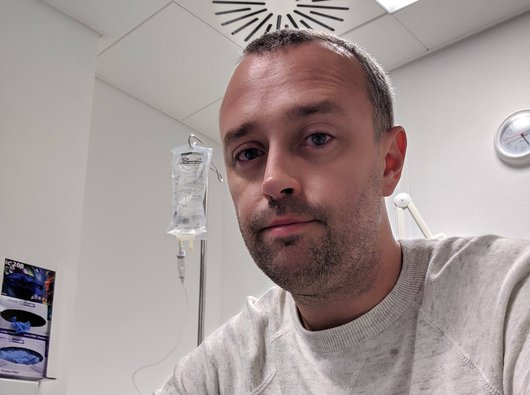
"It made a big difference to me when someone showed me how to breathe properly with gas and air. So if you’re offered that, ask how to use it for maximum effect."
Scott, living with myeloma since 2019
Read Scott’s story: What I’ve learned as a gay man with blood cancer
Scans and X-rays
You should have a CT, PET-CT or MRI scan to look for signs of bone damage. Your whole body will be scanned, and some areas may be looked at in more detail.
You might also have X-rays of some of your bones to look for areas of myeloma.
If you have non-secretory myeloma, scans are essential to show its progress and make decisions about treatment. This is because non-secretory myeloma does not release paraproteins into the blood, so it can’t be monitored with blood tests.

Order your free guide to myeloma
Includes myeloma treatments, living well with myeloma and questions to ask your medical team.
Genetic tests
Cancer cells have gene changes that build up over time. We don’t know why this happens in an individual person. But knowing which genes are affected helps doctors give a specific diagnosis. It also gives information about how a person’s myeloma might develop and, in some cases, which treatments may work best.
You may have a fluorescence in situ hybridisation (FISH) test. This analyses gene changes in the myeloma cells. It's done using bone marrow samples taken during a bone marrow biopsy.
Other less common genetic tests include tests looking for specific changes in the tumour suppressor gene (TP53). These can give information on how the myeloma may behave.
B2M and albumin test
These are blood tests that measure the levels of two proteins in the blood – beta-2 microglobulin (B2M or ß2M) and albumin. In myeloma:
- B2M levels can be higher than normal
- albumin levels can be lower than normal.
These test results give more information about the myeloma and what’s likely to happen in the future (your prognosis).
Lactate dehydrogenase (LDH) test
This is a blood test that measures the level of a protein called lactate dehydrogenase (LDH) in the blood. Higher levels are a sign of cell and tissue damage. This gives more information about your prognosis.
What happens next if I have myeloma?
If you are diagnosed with myeloma, your medical team will meet to work out the best treatment or monitoring plan for you.
The team will include doctors, nurses, and other health and social care professionals who specialise in diagnosing, treating and caring for people with myeloma. You may hear it called a multidisciplinary team (MDT).
They will look at your test results and your general health, and discuss suitable treatment options. You will then meet with a haematologist (specialist in blood diseases). They will explain the treatment plan they recommend and help you decide what to do.
You should get the name and contact details for someone in your medical team who will be your main contact person. This is usually a clinical nurse specialist (CNS). They are there to answer any questions that you or your family have.
Tests to monitor myeloma
After you are diagnosed, you will have regular tests to monitor the myeloma. This will happen if you don’t need treatment yet, and if you are having check-ups after treatment.
Tests used to monitor myeloma may include:
- full blood count (FBC)
- total immunoglobulin levels
- serum protein electrophoresis
- immunofixation
- serum free light chain
- serum calcium test
- urea, creatinine and electrolytes test
- lactate dehydrogenase (LDH) test.
See tests to diagnose myeloma for more information about these tests.
You may also have urine tests, more scans and bone marrow biopsies if your doctor thinks you need them.
Minimal residual disease (MRD) testing
After treatment, you may have a tiny amount of myeloma left in your body. This is called minimal residual disease (MRD). Over time, the number of myeloma cells may increase and cause a relapse.
Standard tests usually aren’t sensitive enough to detect MRD. But new tests and scans can pick up very small numbers of myeloma cells.
In future, MRD testing may be used during check-ups, to give information about a person’s prognosis. It could help doctors to understand how well treatment is working, and whether they need to re-start or change treatment.
More research is needed, so MRD testing is not routinely done at the moment. It is not yet available at all hospitals. But you may have MRD testing if you are taking part in a clinical trial.

Get a weekly support email from us
Get clear and simple information, practical tips, and advice from other people with blood cancer to help you during the first few weeks and months after diagnosis.
More About ThisAbout this page
This information has been accredited with the PIF TICK, the UK's only quality mark for trusted health information.
Last full review May 2026. Next full review due May 2029. We may make factual updates between reviews.
Thank you to Consultant Haematologist Dr Emma Searle and Clinical Nurse Specialist Amie Martin for checking the clinical accuracy of our myeloma information. Thanks also to Cecelia, Craig, Joan, Kaleigh, Kerry, Louise, Mart, Sandra, Scott for supporting this project and sharing their experience of living with myeloma.